 ↗
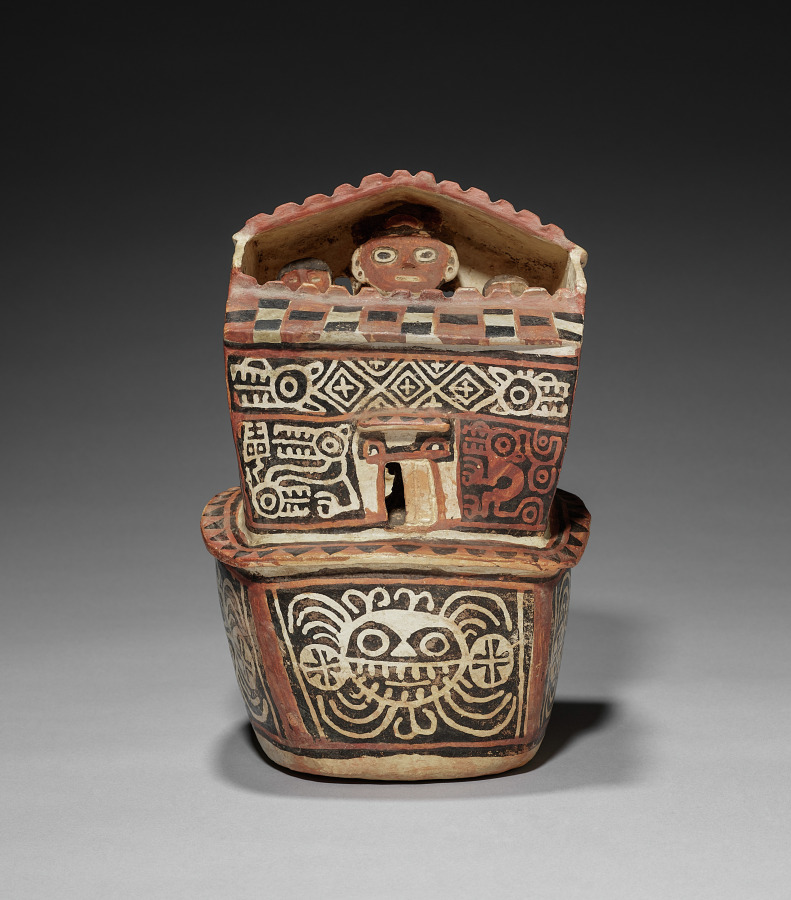
Central Andes (Peru), Recuay people · 1–700 CE
Architectural Vessel
Creator not recorded
John L. Severance Fund · The Cleveland Museum of Art
Image licence: CC0 · Image policy · Museum record & image source ↗
Creator not recorded by the museum
Two bats give a bowl a second axis beyond its circular rim. Turn its image and see at what point the bowl's opening takes precedence over the animals.
Site interpretation and practical exercises. Historical and technical evidence is linked below.
Sources for context The Cleveland Museum of Art ↗
Read alongside
The archaeological Tairona civilization of mountainous northern Colombia is believed to be ancestral to the contemporary Kogi indigenous group. Ancient Tairona sites are terraced, and characterized by circular stone building foundations. The most famous form of Tairona art is gold jewelry, especially lost-wax cast figurines of chiefs, and anthropomorphic bats and birds. Tairona ceramics are less well known. This bowl has two protruding bat heads and four legs. The incurved sides of the bowl to either side of each head represents the bats' wings. The vessel's surface is decorated with raised serpents, as well as incised and impressed patterns.
Collection text · The Cleveland Museum of Art · CC0↗Creator not recorded
 ↗
Creator not recorded
 ↗
Creator not recorded
 ↗
Creator not recorded