 ↗
China, Ming dynasty (1368–1644) · after 1490
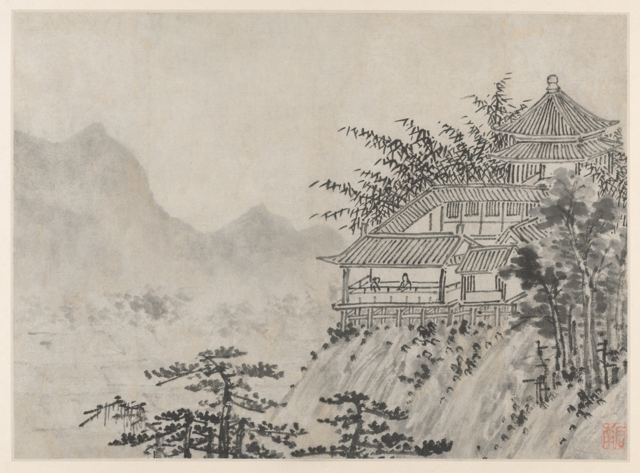
The Thousand Acres of Clouds, from Twelve Views of Tiger Hill, Suzhou
Shen Zhou
#BA9971#CBAF86#A5855F#C1A37C#C7A87E#DBC7A8Estimated from six colour groups in the museum image, including visible paper or borders. Reproduction and lighting affect the result; these are image-area proportions, not pigment measurements.
Gift of Leonard C. Hanna Jr. · The Cleveland Museum of Art
Image licence: CC0 · Image policy · Museum record & image source ↗
Jerome's study makes thought visible through the organisation of a room. Compare the sitter's scale with the working space and objects surrounding him.
Site interpretation and practical exercises. Historical and technical evidence is linked below.
Sources for context The Cleveland Museum of Art ↗
Read alongside
Jerome leans towards a book, with a lion nearby and furniture defining a working interior. Books and the concentrated posture make study central to the subject. The contrast between the crowded folds of the robe and the more open surroundings helps the seated figure hold attention.
Site study note · based on the linked catalogueExplore the artist’s life and works ↗
Pen, wash and white highlights perform different jobs: lines describe edges, wash gathers shadows and white brings selected folds forward. The catalogue also records pricking—small holes that can help transfer a design. This is evidence that a drawing can participate in a working process, rather than existing only as a self-contained picture.
Site study note · catalogue facts and visual interpretation
Check the museum record ↗↗Shen Zhou
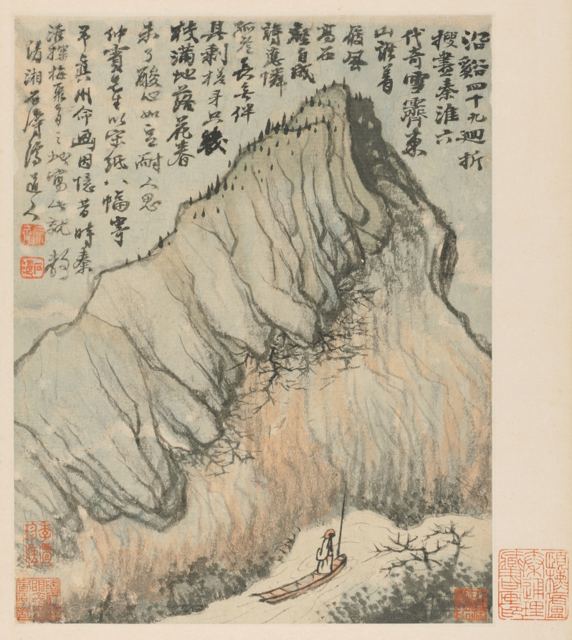 ↗
Shitao
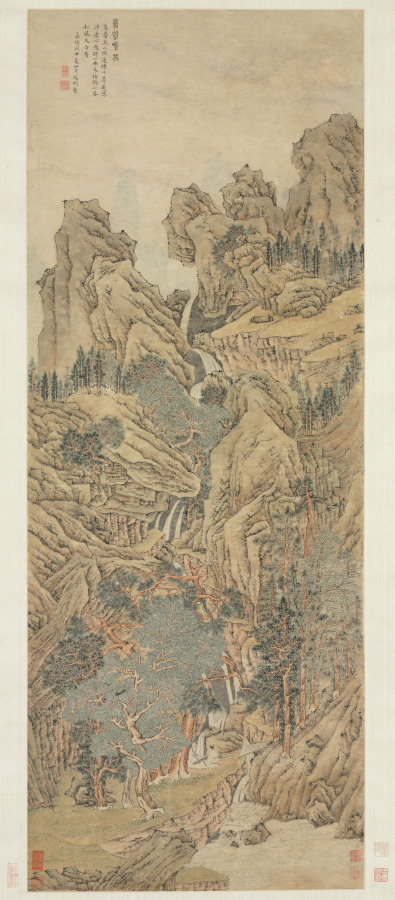 ↗
Wen Zhengming
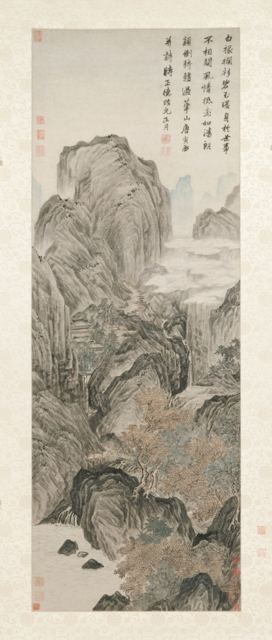 ↗
Tang Yin