 ↗
China, Ming dynasty (1368–1644) · after 1490
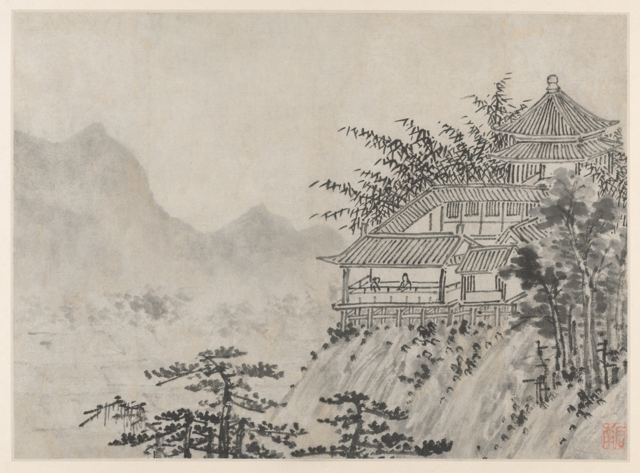
The Thousand Acres of Clouds, from Twelve Views of Tiger Hill, Suzhou
Shen Zhou
#DAD1C1#9F9583#7F7767#EDE6D5#F2ECDE#B8AE9EEstimated from six colour groups in the museum image, including visible paper or borders. Reproduction and lighting affect the result; these are image-area proportions, not pigment measurements.
John L. Severance Fund · The Cleveland Museum of Art
Image licence: CC0 · Image policy · Museum record & image source ↗
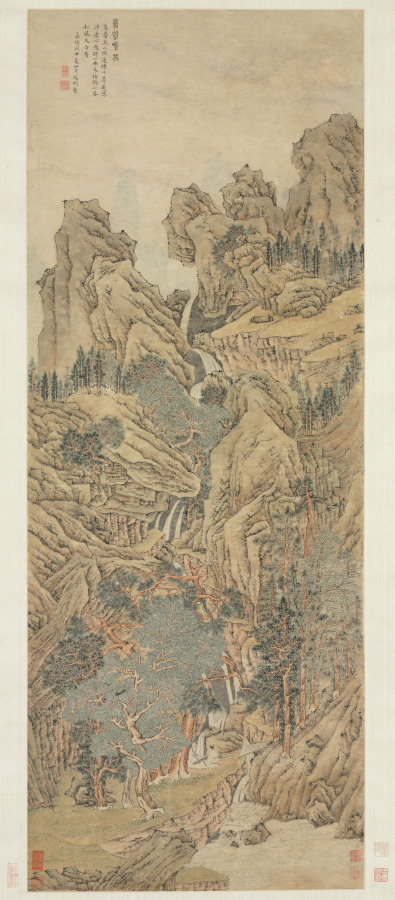
Tang Yin looked back to the Song painter Li Tang. The piled summits make that artistic inheritance something you can actually trace, peak by peak.
Try drawing Mount Hua with one rising contour and no interior detail. Then add the first mark needed to turn a generic peak into this particular mountain.
Site interpretation and practical exercises. Historical and technical evidence is linked below.
Sources for context The Cleveland Museum of Art ↗
Read alongside
In this work, Tang Yin accumulates towering mountain summits in the manner of the Sung master, Li Tang, to capture the monumental presence of his subject. Tang Yin’s angular brushstrokes and ink washes of varied intensity give texture to the rocky surface and accent the play of light. Mount Hua is situated in southern Shaanxi province in North China. Hardly accessible during Tang Yin’s time, the mountains were frequented by immortality seekers to dwell or collect herbal drugs there.Tang Yin's potentially brilliant career was shattered in 1499 after he went to the capital to take the jinshi examination. He got entangled in a bribery case that caused him to spend seven years in prison. After his release, Tang returned to Suzhou, and settled on a career as a professional painter. One of Tang's few dated works, Mount Hua was painted seven years after this incident.
Collection text · The Cleveland Museum of Art · CC0↗Shen Zhou
 ↗
Shitao
 ↗
Wen Zhengming
 ↗
Creator not recorded