 ↗
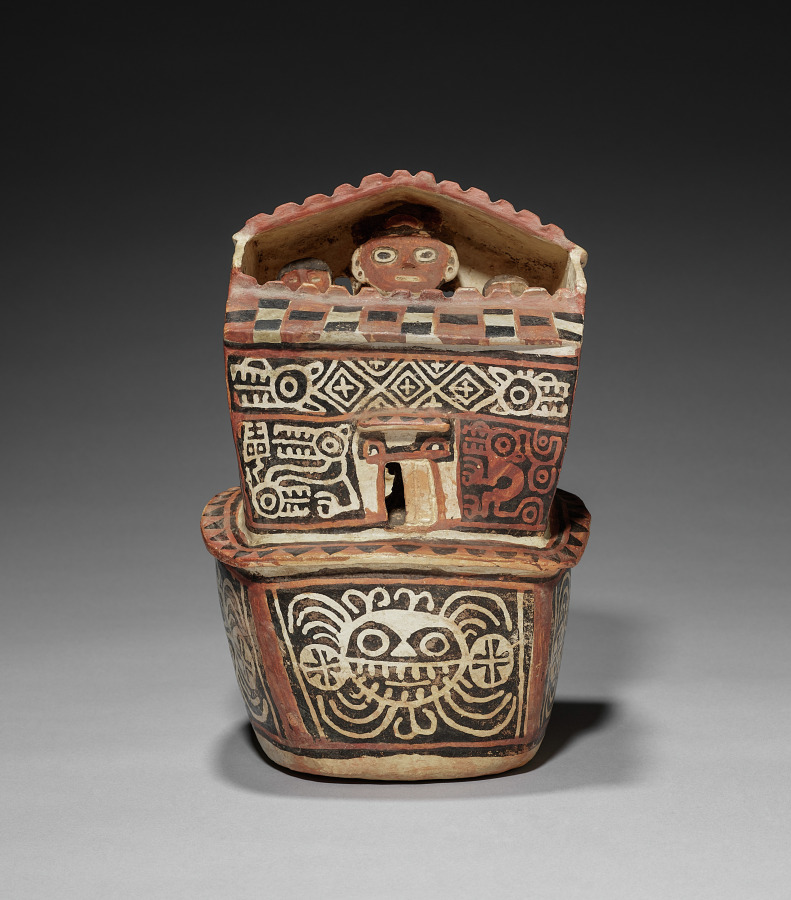
Central Andes (Peru), Recuay people · 1–700 CE
Architectural Vessel
Creator not recorded
John L. Severance Fund · The Cleveland Museum of Art
Image licence: CC0 · Image policy · Museum record & image source ↗
Creator not recorded by the museum
A transport jar must pass from body to ground and back. Sketch it full, not empty, and see why the transition between belly, neck and grip matters.
Site interpretation and practical exercises. Historical and technical evidence is linked below.
Sources for context The Cleveland Museum of Art ↗
Read alongside
The Nupe, an Islamic people from northern Nigeria, embellish pottery and metalwork with intricate, nonrepresentational patterning. A female potter built this vessel by joining two bowls into a globe shape, then adding the neck. After drying, she used shells to press in designs before burnishing the exterior to a high shine. Finally, she fired the gourd-shaped vessel in a furnace. The patterns beautify and allow a firm grip when lifting the vessel. As the Gwari and Nupe people are neighbors, pottery shapes and designs often transferred between them. Look for similar zigzags and concentric lines on the nearby Gwari-inspired vessels.
Collection text · The Cleveland Museum of Art · CC0↗Creator not recorded
 ↗
Creator not recorded
 ↗
Creator not recorded
 ↗
Creator not recorded