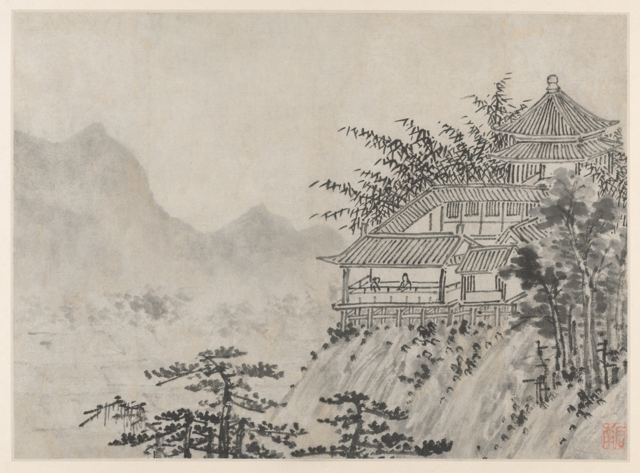
 ↗
China, Ming dynasty (1368–1644) · after 1490
The Thousand Acres of Clouds, from Twelve Views of Tiger Hill, Suzhou
Shen Zhou
#D1BEA3#BAAB97#DBC6A9#908374#C8B49A#E5D6BEEstimated from six colour groups in the museum image, including visible paper or borders. Reproduction and lighting affect the result; these are image-area proportions, not pigment measurements.
Mr. and Mrs. William H. Marlatt Fund · The Cleveland Museum of Art
Image licence: CC0 · Image policy · Museum record & image source ↗
Rock, orchid and bamboo each ask a brush to turn differently. Try giving all three the same stroke and see which subject loses its identity first.
Site interpretation and practical exercises. Historical and technical evidence is linked below.
Sources for context The Cleveland Museum of Art ↗
Read alongside
Orchid leaves, bamboo and rocks supply contrasting kinds of movement: long curves, pointed leaves and heavier masses. The spaces between them stop the handscroll from becoming a continuous wall of ink. Writing and painting share the same surface, so the eye moves between readable characters and plant-like marks.
Site study note · based on the linked catalogueShitao’s 1662 work is ink on paper, without colour listed in the medium. Variation therefore comes from ink strength, brush pressure, moisture and the paper left visible. A pale passage is not simply a missing part; it can help distinguish a leaf, open a gap or give a dense group room to breathe.
Site study note · catalogue facts and visual interpretation
Check the museum record ↗↗Shen Zhou
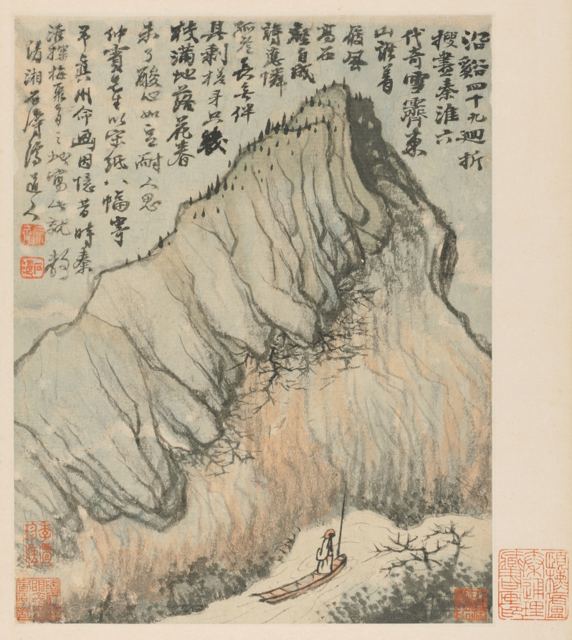 ↗
Shitao
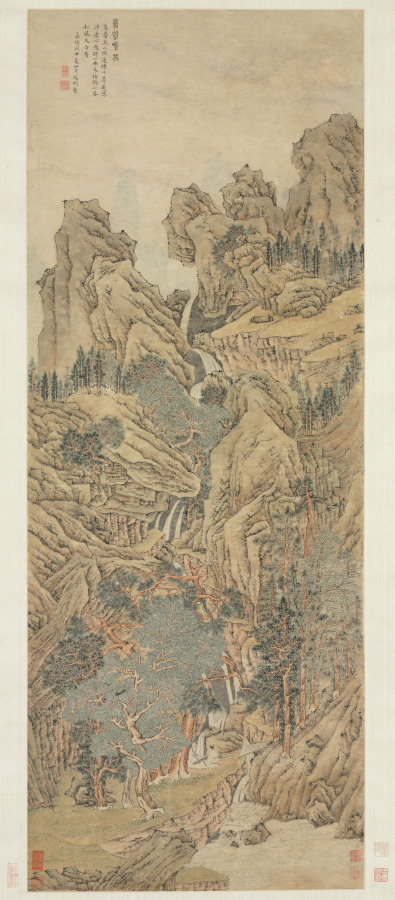 ↗
Wen Zhengming
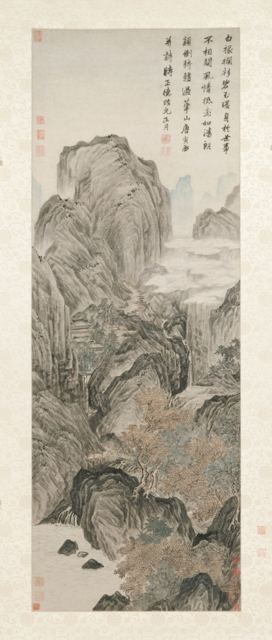 ↗
Tang Yin