 ↗
China, Ming dynasty (1368–1644) · after 1490
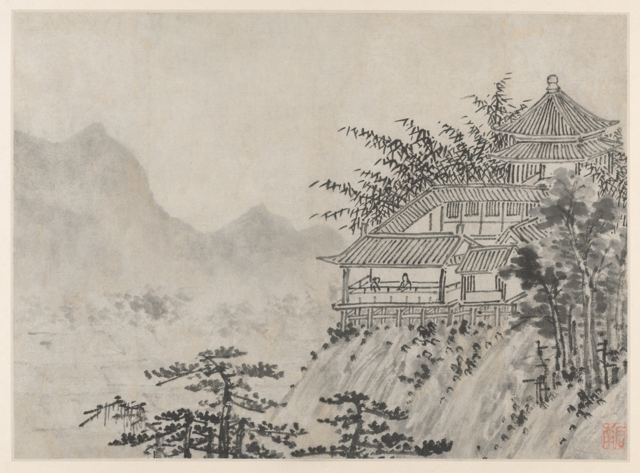
The Thousand Acres of Clouds, from Twelve Views of Tiger Hill, Suzhou
Shen Zhou
#7C7059#958468#AE9574#A09277#D8D7C6#B5A98FEstimated from six colour groups in the museum image, including visible paper or borders. Reproduction and lighting affect the result; these are image-area proportions, not pigment measurements.
Andrew R. and Martha Holden Jennings Fund · The Cleveland Museum of Art
Image licence: CC0 · Image policy · Museum record & image source ↗
Locate the hermits before and after looking at the mountains. Their small scale can change from an identifying detail into a measure of the distance they have withdrawn.
Site interpretation and practical exercises. Historical and technical evidence is linked below.
Sources for context The Cleveland Museum of Art ↗
Read alongside
A long landscape allows mountains, water, buildings and writing to unfold in sequence. Its width matters: a handscroll can be explored section by section rather than absorbed like one small framed picture. The title’s scholar-hermits are situated within a much larger natural setting, so human activity is measured against distance and terrain.
Site study note · based on the linked catalogueInk and light colour on silk combine fine marks with softer passages. The current museum record names Tang Yin and dates the work to 1500–1510. Read those catalogue facts separately from an imagined biography of the figures: a literary idea of retreat does not prove that the scene records one actual meeting.
Site study note · catalogue facts and visual interpretation
Check the museum record ↗↗Shen Zhou
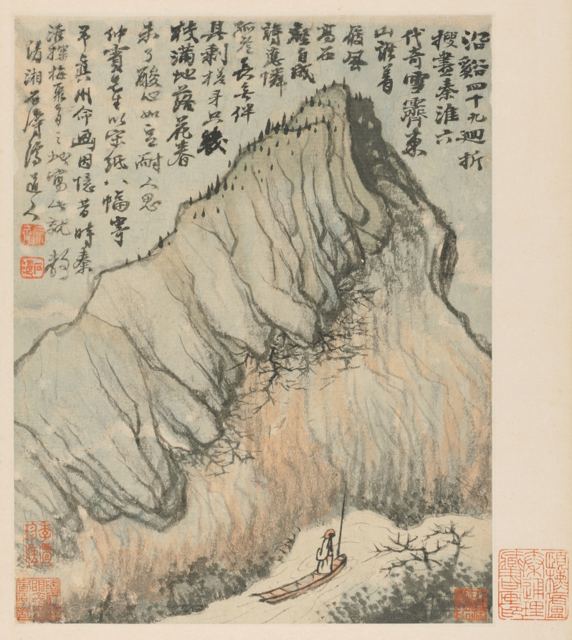 ↗
Shitao
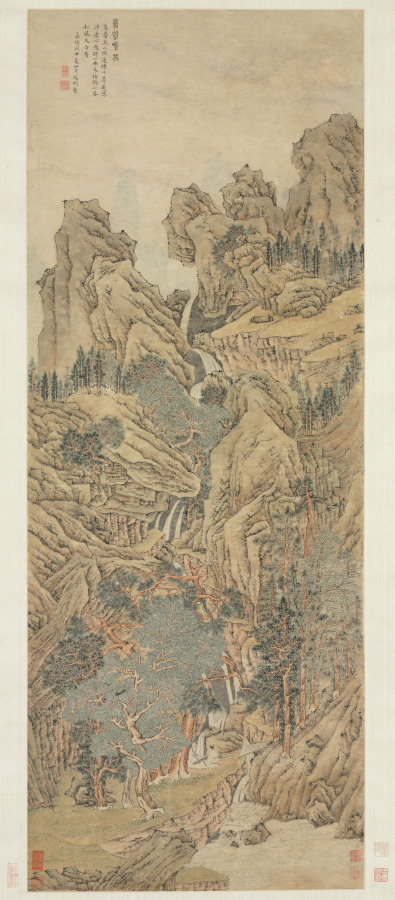 ↗
Wen Zhengming
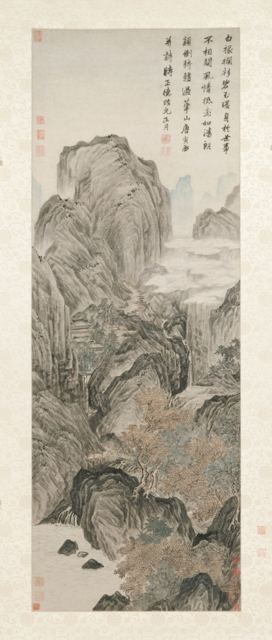 ↗
Tang Yin