 ↗
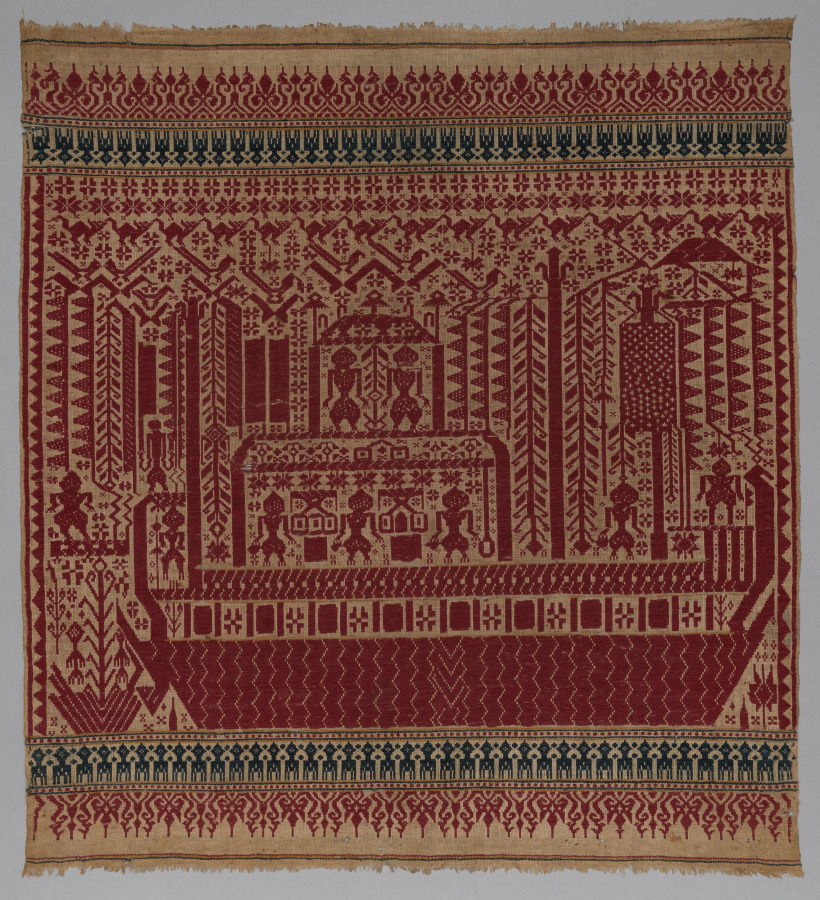
Indonesia, Sumatra, Lampung, 19th century · 1800s
Tampan Pasisir (Ship Cloth)
Creator not recorded
Leonard C. Hanna Jr. Fund · The Cleveland Museum of Art
Image licence: CC0 · Image policy · Museum record & image source ↗
Creator not recorded by the museum
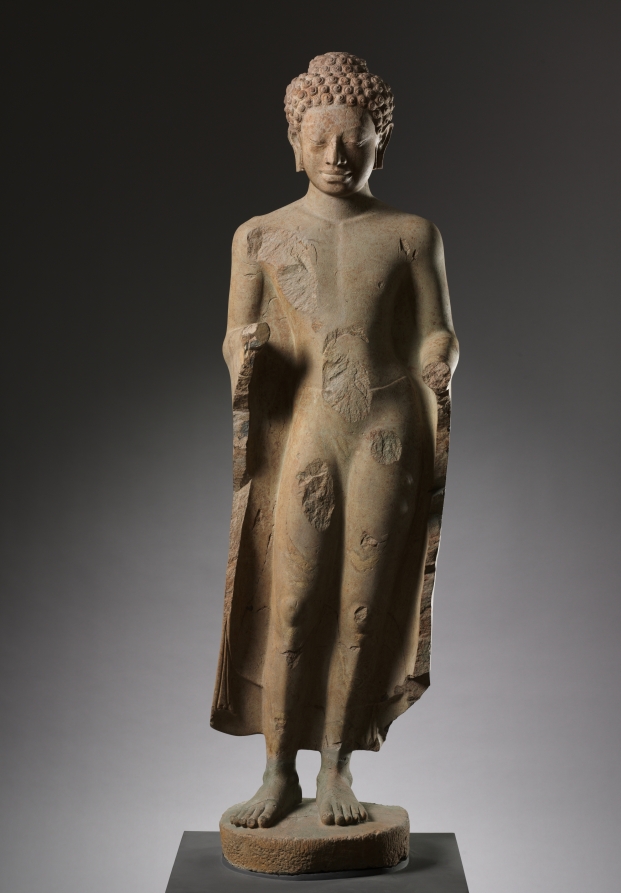
The tall crown, upright torso and short wrapped garment make this sandstone figure readable even though limbs and facial details have been lost. Missing parts affect our encounter: a present-day outline is not necessarily the complete silhouette the sculptor intended. In a study drawing, distinguish a deliberately carved edge from a break before interpreting the pose.
Cleveland dates the figure to 650–99 in Cambodia, before the Angkor period, and proposes that it stood as the main object of worship in a small brick sanctuary. The proposed setting matters because a devotional image is encountered differently from an isolated museum photograph. Keep the word probably: the record does not establish the original room, lighting or complete arrangement.
Compare the crown’s compact geometric shape with the broader modelling of the chest. They establish different kinds of emphasis without requiring a painted colour contrast. Try a three-tone drawing of crown, torso and garment, leaving damaged parts uncompleted. This studies the surviving form without disguising uncertainty as reconstruction.
Site interpretation and practical exercises. Historical and technical evidence is linked below.
Sources for context Cleveland — Vishnu ↗
Section sources checked 2026-11-22
Read alongside
The muscular physique, sensitive smile, and flat-topped high crown are characteristics of Vishnu images made during the pre-Angkorian period (c. 550–802) in Cambodia. This sculpture probably was the sole object of worship in a small brick temple sanctum.
Collection text · The Cleveland Museum of Art · CC0↗Creator not recorded
 ↗
Creator not recorded
 ↗
Creator not recorded
 ↗
Creator not recorded