 ↗
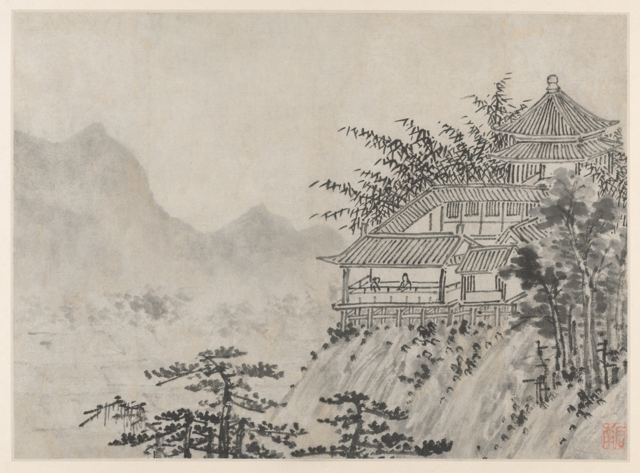
China, Ming dynasty (1368–1644) · after 1490
The Thousand Acres of Clouds, from Twelve Views of Tiger Hill, Suzhou
Shen Zhou
#92725C#7A5F51#F0CEB2#A37E60#9C7A5F#C9A585Estimated from six colour groups in the museum image, including visible paper or borders. Reproduction and lighting affect the result; these are image-area proportions, not pigment measurements.
Purchase from the J. H. Wade Fund · The Cleveland Museum of Art
Image licence: CC0 · Image policy · Museum record & image source ↗
Bamboo, ducks and the rushing stream move in three ways. Give each a different kind of line and test which lines can be exchanged without confusion.
Site interpretation and practical exercises. Historical and technical evidence is linked below.
Sources for context The Cleveland Museum of Art ↗
Read alongside
Bamboo, rocks and ducks make a small stretch of moving water feel like a complete landscape. Firm dark passages hold attention near the plants and birds, while the stream opens a route between them. The subject depends on relationships among living things and their setting, rather than one isolated centrepiece.
Site study note · based on the linked catalogueExplore the artist’s life and works ↗
Ink and light colour are applied to silk in a hanging-scroll format. Thin washes can suggest atmosphere while sharper brush marks distinguish foliage and rock. The catalogue dates the work broadly to the Southern Song period; that range is not an exact moment in Ma Yuan’s career and should not be used to invent an early or late phase.
Site study note · catalogue facts and visual interpretation
Check the museum record ↗↗Shen Zhou
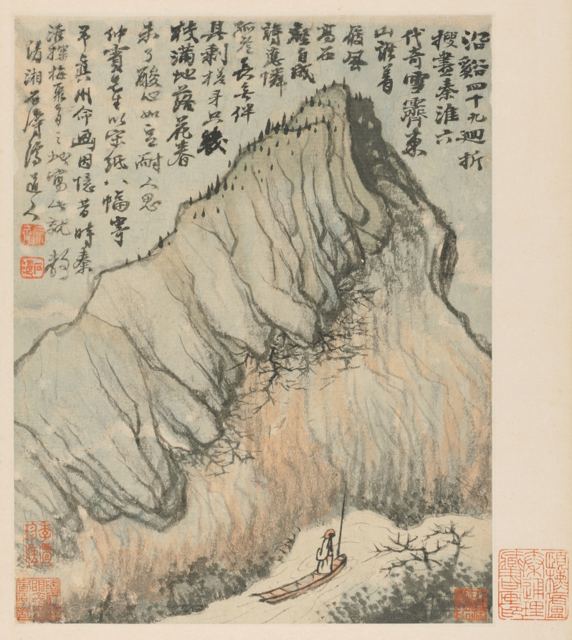 ↗
Shitao
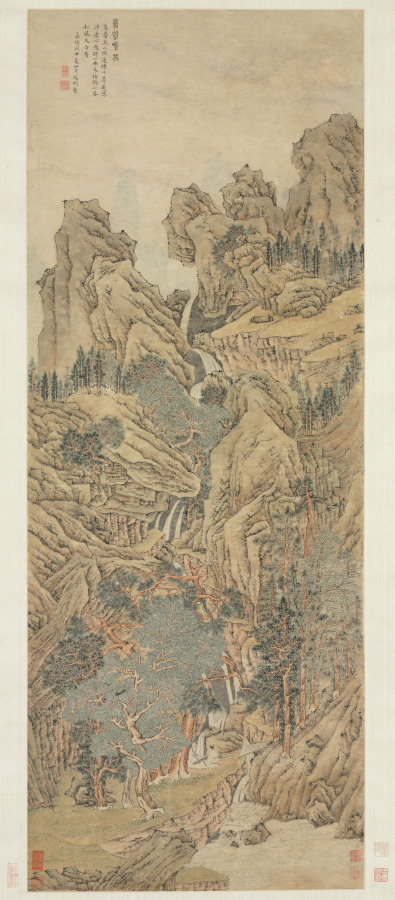 ↗
Wen Zhengming
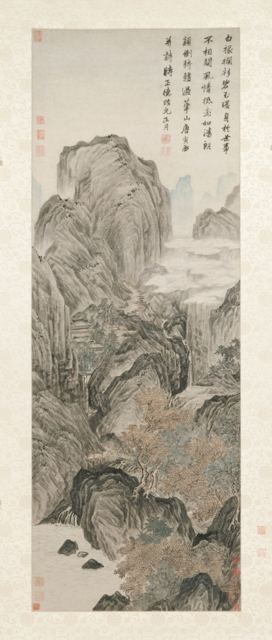 ↗
Tang Yin