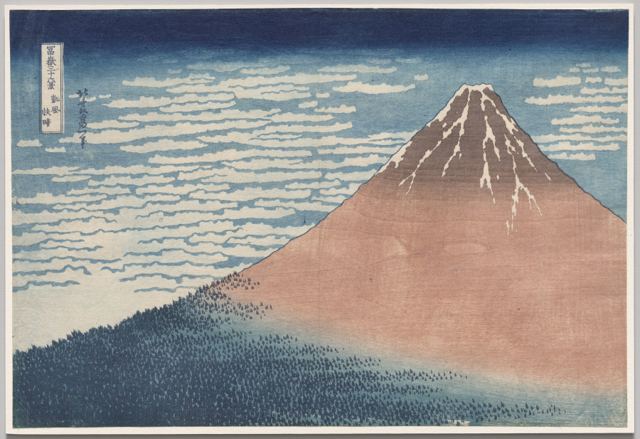
 ↗
Japan, Edo period (1615–1868) · early 1830s
South Wind, Clear Sky, from Thirty-Six Views of Mount Fuji
Katsushika Hokusai
Purchase from the J. H. Wade Fund · The Cleveland Museum of Art
Image licence: CC0 · Image policy · Museum record & image source ↗
The dish gives the plovers four square boundaries. Redraw the waves inside a circle and notice which direction of flight loses its strongest contrast.
Site interpretation and practical exercises. Historical and technical evidence is linked below.
Sources for context The Cleveland Museum of Art ↗
Read alongside
The Ogata brothers Kōrin and Kenzan often collaborated on ceramics. This dish is one of a set used for serving tea cakes. Kenzan shaped the dish, after which Kōrin drew the iron oxide design of plovers, a type of shorebird, flying over waves. Kenzan then covered the object with a clear glaze and fired it. Kōrin placed his signature next to his design, while Kenzan signed the back.
Collection text · The Cleveland Museum of Art · CC0Explore the artist’s life and works ↗
Kenzan formed the dish and Kōrin drew birds and waves for its surface. The four straight edges give those moving marks something to push against. Imagine the same birds inside a round plate. Would they still seem to cross the space so quickly? A designer working with a maker can use the rim as part of the picture.
Site study note · catalogue facts and visual interpretation
Check the museum record ↗↗Katsushika Hokusai
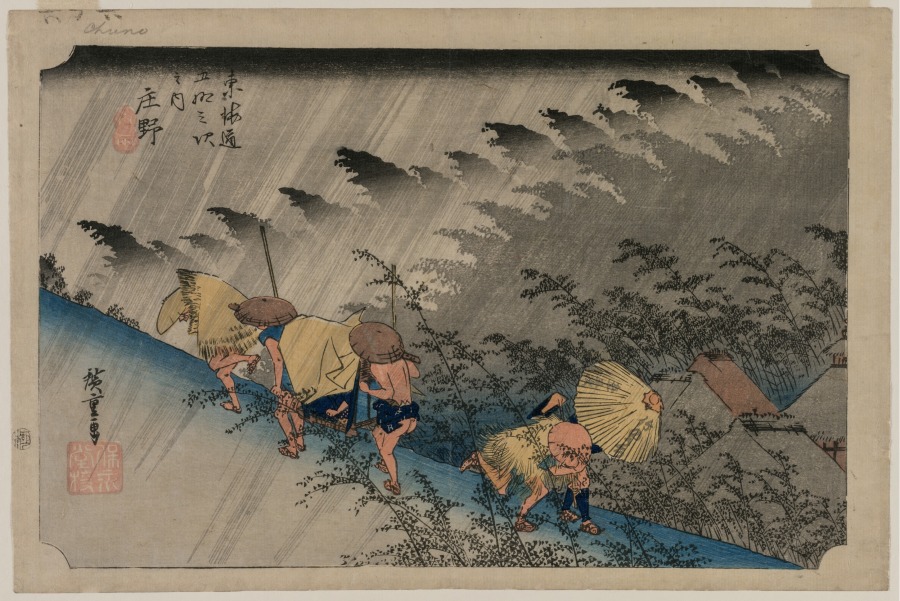 ↗
Utagawa Hiroshige
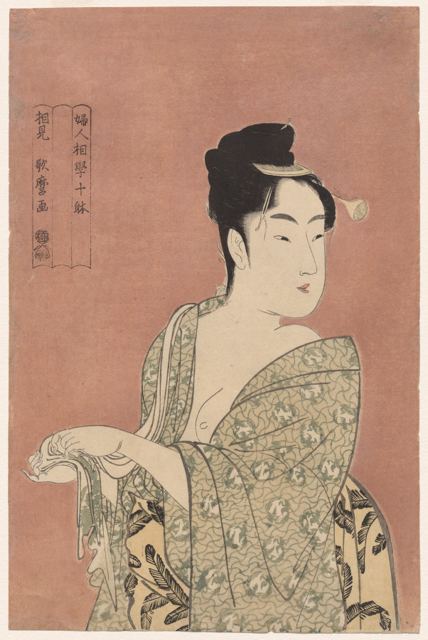 ↗
Kitagawa Utamaro
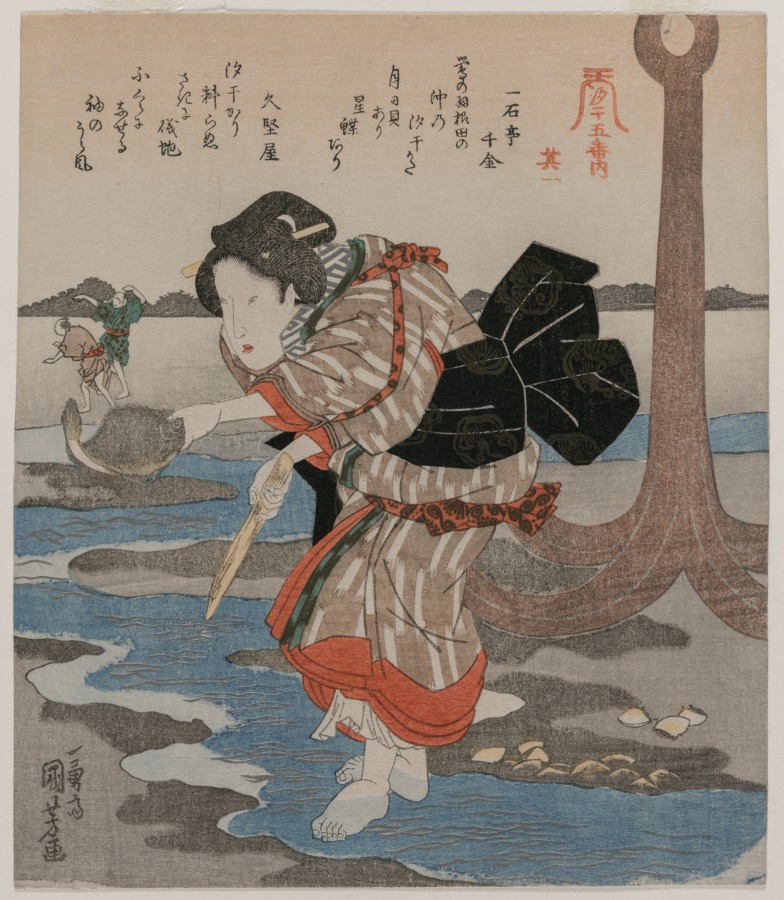 ↗
Utagawa Kuniyoshi