 ↗
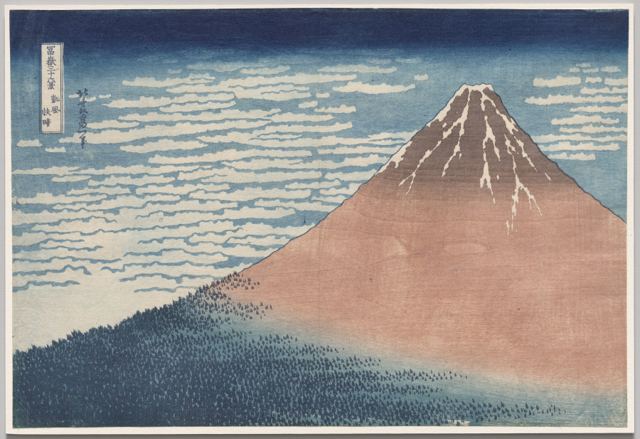
Japan, Edo period (1615–1868) · early 1830s
South Wind, Clear Sky, from Thirty-Six Views of Mount Fuji
Katsushika Hokusai
Gift of Mrs. T. Wingate Todd from the Collection of Dr. T. Wingate Todd · The Cleveland Museum of Art
Image licence: CC0 · Image policy · Museum record & image source ↗
The sloping road and the travellers’ bent postures make movement look effortful. Compared with the steady bridge in Sudden Shower, the ground here already asks the figures to climb or descend. Rain compounds that difficulty. Cover the rain marks temporarily. If the figures still look hurried or burdened, the body shapes and their relation to the slope are doing part of the storytelling.
Cleveland notes that three printing blocks produced the three greys that suggest depth in the bamboo. This is a specific production choice with a visible spatial purpose. Compare the darkest vegetation with the paler shapes behind it. Their difference helps separate distances without drawing a detailed outline around every leaf. In a print, such distinctions have to survive the translation from a design to separate carved and inked surfaces.
The museum identifies the publisher’s name and part of the series title on an umbrella. That small detail connects the rainy journey to the commercial life of the print itself. The scene and its publication are not completely separate worlds. Rather than treating the lettering as meaningless decoration, look at how it occupies an object that already belongs naturally in the weather scene.
Use black, middle grey and pale grey to draw three groups of trees. Keep their general shape similar, then change their overlap and contrast. Add a small figure only after the depth is legible. This tests whether the environment already has a clear structure before a person supplies a story. Avoid assuming that the lightest object must always be farthest away; compare the effect against its immediate neighbours.
Site interpretation and practical exercises. Historical and technical evidence is linked below.
Sources for context Cleveland Museum of Art · Driving Rain at Shōno ↗
Section sources checked 2026-11-22
Read alongside
Utagawa Hiroshige’s design for this print captures the atmospheric qualities of rain and its effects on two groups of travelers. Three printing blocks were required to produce the three shades of gray used to suggest distance in the thickets of bamboo in the background. The publisher’s name, “Takenouchi,” and part of the series title, Fifty-Three Stations, are written on one person’s umbrella. Hiroshige created many different print series on the Tokaidō, a road that ran from Kyoto to Edo (now Tokyo). Shōno was a minor way station along this largely coastal route.
Collection text · The Cleveland Museum of Art · CC0↗Katsushika Hokusai
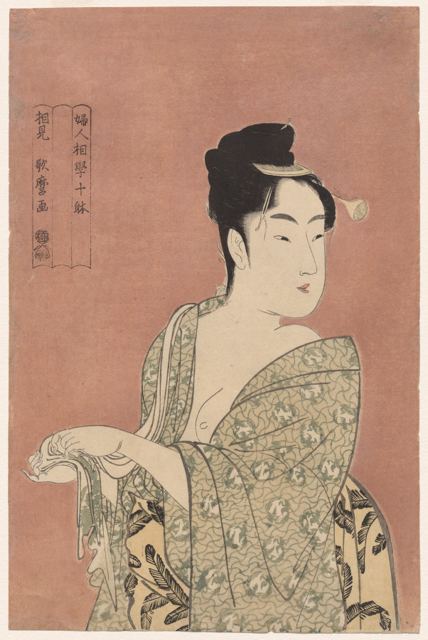 ↗
Kitagawa Utamaro
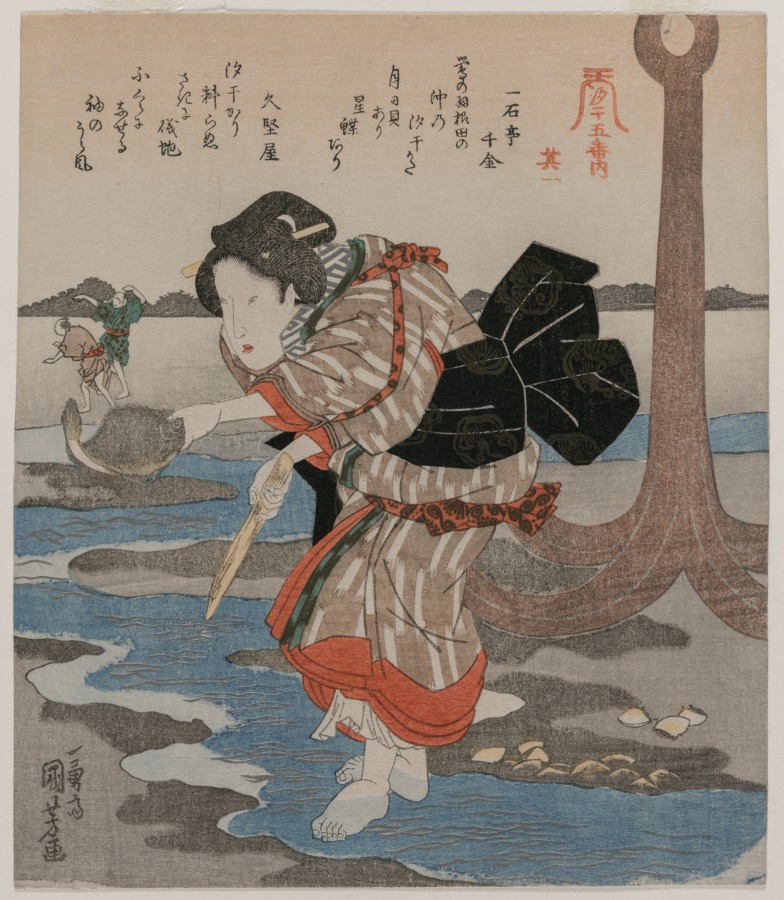 ↗
Utagawa Kuniyoshi
 ↗
Utagawa Toyokuni