 ↗
Japan, Edo period (1615–1868) · 1833
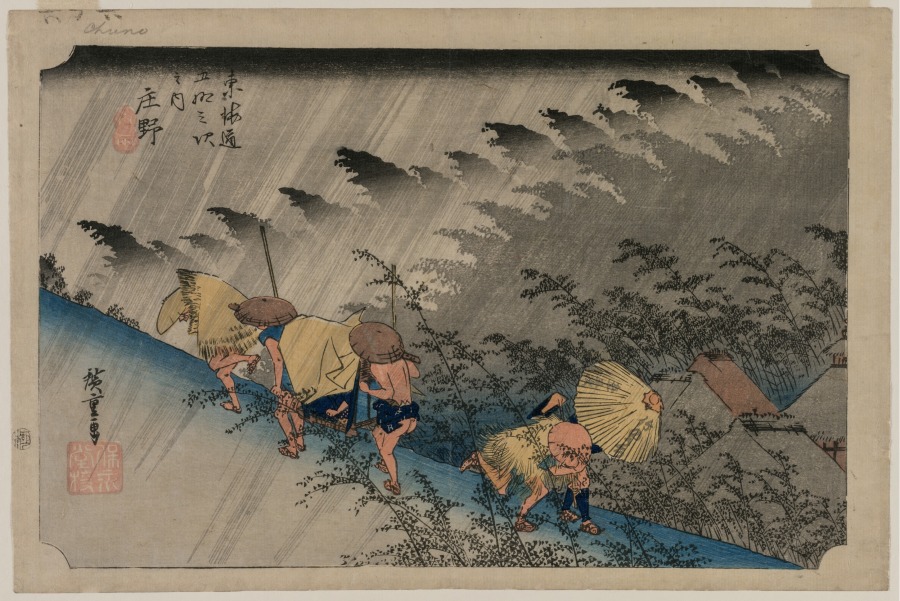
Driving Rain at Shōno, from Fifty-Three Stations of the Tokaidō
Utagawa Hiroshige
Bequest of Edward L. Whittemore · The Cleveland Museum of Art
Image licence: CC0 · Image policy · Museum record & image source ↗
The long slope gives the mountain a clear direction. Against it, the small cloud shapes create a different pace. Your eye can travel along the slope in one movement, then pause repeatedly across the sky. Much of the picture’s strength comes from this contrast between one large shape and many small ones. The mountain does not need a detailed surface everywhere to feel substantial.
Cleveland relates the reddish appearance to late summer and early autumn, and places the print within Hokusai’s series of views of Fuji. A series makes a useful question possible: what changes while the named subject stays the same? Compare Rain Below the Mountain. Instead of treating one print as the correct portrait of Fuji, look at how each design redistributes attention between slope, sky and weather.
Make three versions of a simple triangular hill. Keep its outline fixed. Change only the size and spacing of marks in the sky, then compare the results from a distance. Dense small marks may make the hill feel quieter by comparison, but they can also distract from it. The result depends on their contrast and location. This is a way to test visual rhythm: the pauses and movements that a repeated pattern creates for the eye.
Site interpretation and practical exercises. Historical and technical evidence is linked below.
Sources for context Cleveland Museum of Art · South Wind, Clear Sky ↗
Section sources checked 2026-11-22
Read alongside
Mt. Fuji, Japan’s highest mountain, appeared in most Japanese 19th-century travel literature. Maps sometimes showed its location with a Fuji-shaped icon and indicated where travelers could get the best view of it. Between 1829 and 1833, Hokusai created a print series depicting thirty-six views of the mountain, including this one, sometimes known as “Red Fuji.” The season in this scene is a time between late summer and early autumn, when the mountain takes on a reddish hue.
Collection text · The Cleveland Museum of Art · CC0↗Utagawa Hiroshige
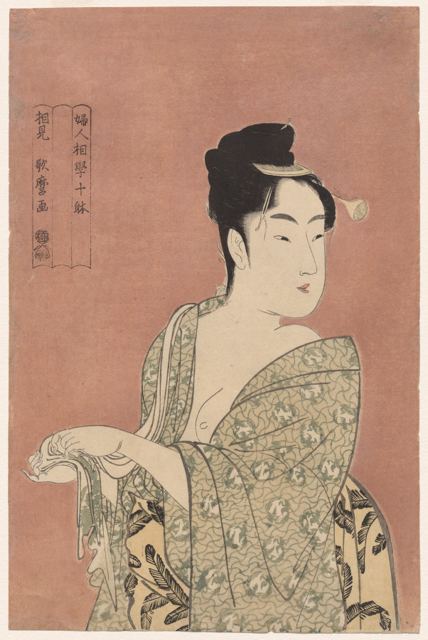 ↗
Kitagawa Utamaro
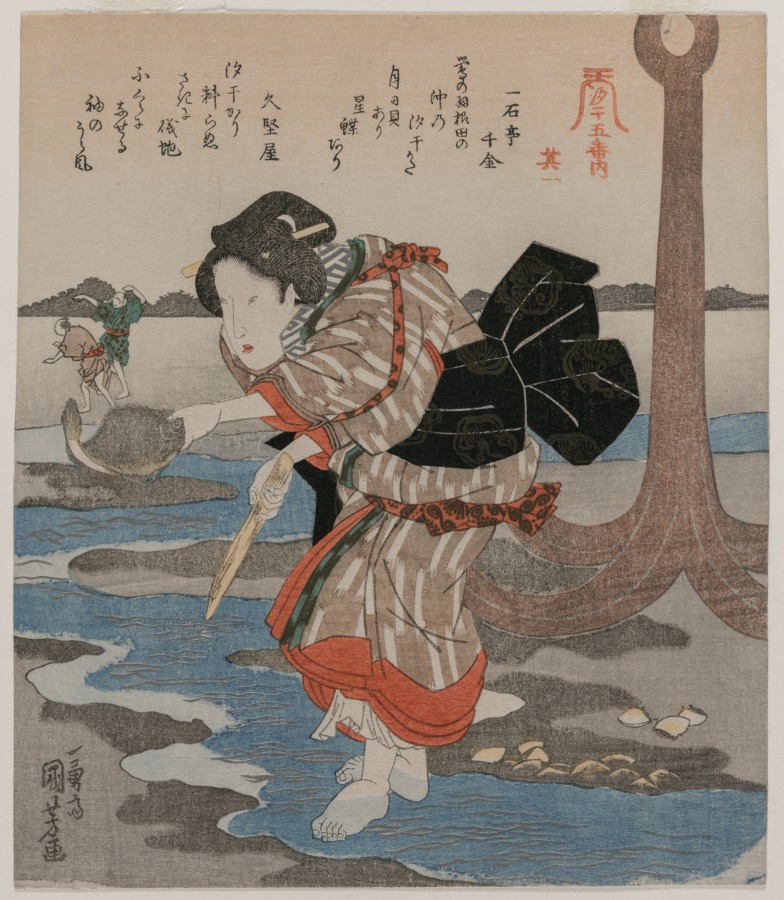 ↗
Utagawa Kuniyoshi
 ↗
Utagawa Toyokuni