 ↗
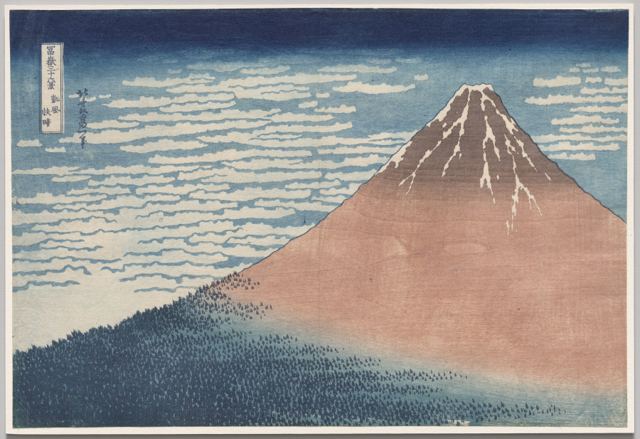
Japan, Edo period (1615–1868) · early 1830s
South Wind, Clear Sky, from Thirty-Six Views of Mount Fuji
Katsushika Hokusai
Bequest of James Parmelee · The Cleveland Museum of Art
Image licence: CC0 · Image policy · Museum record & image source ↗
Compare light rain on the Sumida with the downpour on Shin-Ōhashi bridge. Rain becomes a different experience when a mark barely interrupts a view rather than cutting across a route.
Site interpretation and practical exercises. Historical and technical evidence is linked below.
Sources for context The Cleveland Museum of Art ↗
Read alongside
Hiroshige makes rain visible through fine lines crossing a riverbank scene. Umbrellas and hurried figures give those lines a human consequence: the weather changes how people move. The river opens a quieter area beyond the busy foreground, so the scene has both movement and breathing room.
Site study note · based on the linked catalogueExplore the artist’s life and works ↗
The medium is colour woodblock printing. A continuous fall of rain can be suggested by repeated cut lines rather than painted droplets. Compare this design with Driving Rain at Shōno: the same weather subject can be organised through different slopes, distances and groups of travellers. Similar subject matter does not make two compositions interchangeable.
Site study note · catalogue facts and visual interpretation
Check the museum record ↗↗Katsushika Hokusai
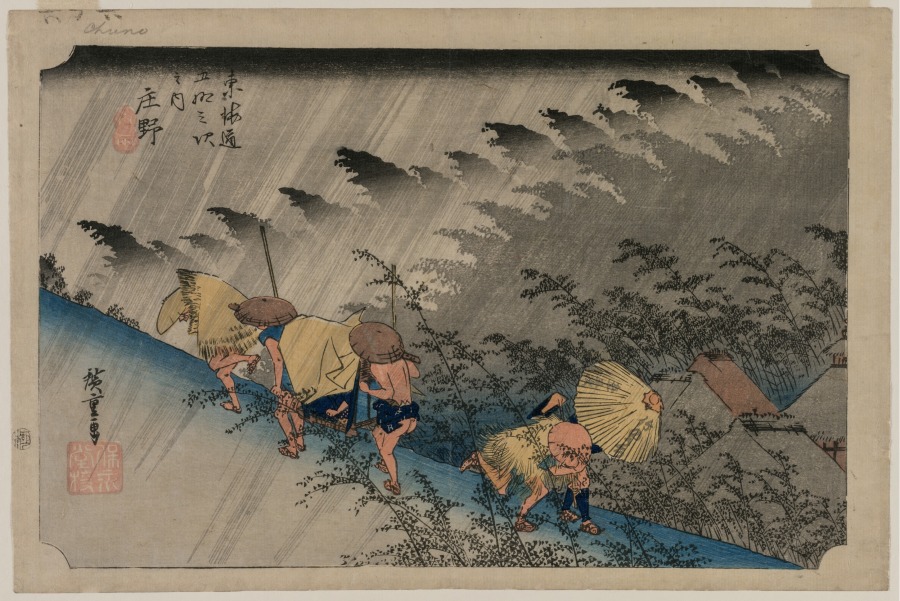 ↗
Utagawa Hiroshige
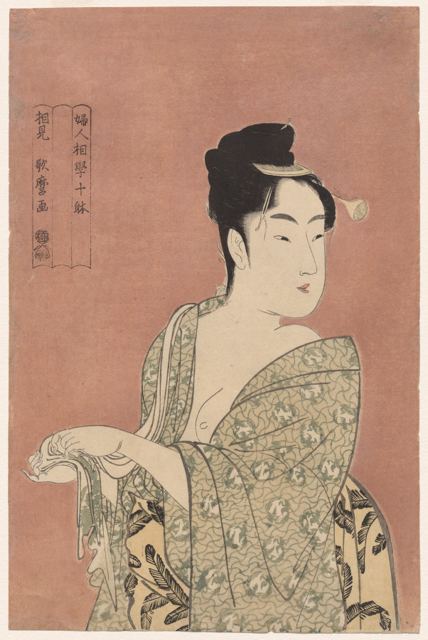 ↗
Kitagawa Utamaro
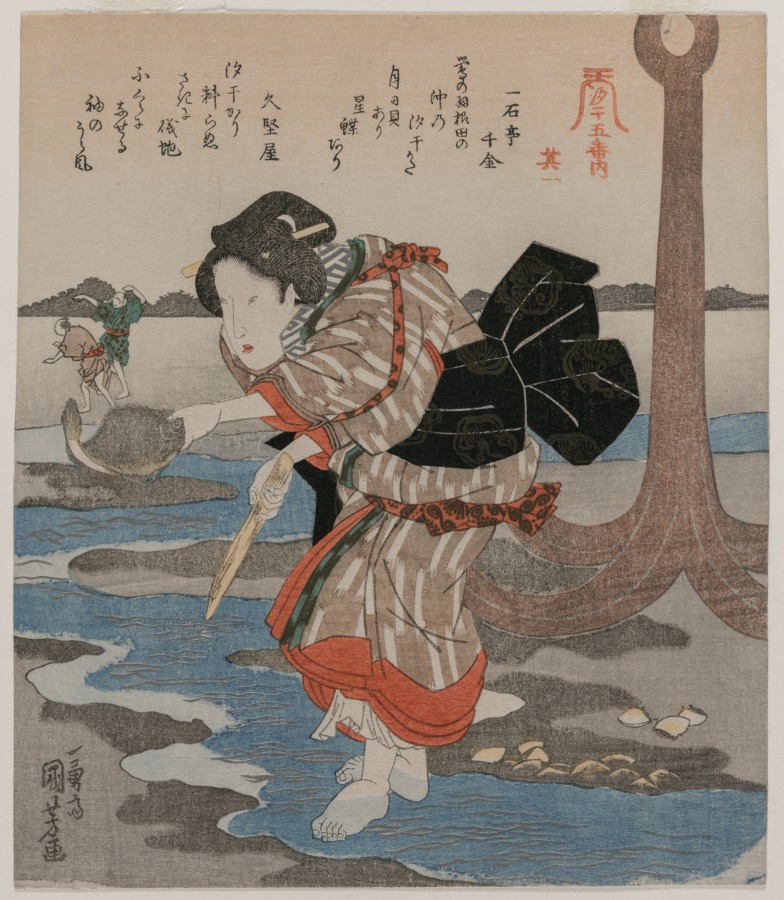 ↗
Utagawa Kuniyoshi