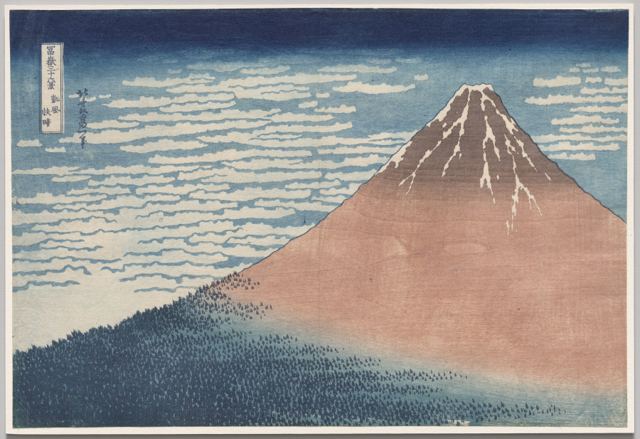
 ↗
Japan, Edo period (1615–1868) · early 1830s
South Wind, Clear Sky, from Thirty-Six Views of Mount Fuji
Katsushika Hokusai
Bequest of James Parmelee · The Cleveland Museum of Art
Image licence: CC0 · Image policy · Museum record & image source ↗
Imagine joining the five sheets one at a time. At which join does a group outing become a city-sized spectacle? The format makes expansion part of the subject.
Site interpretation and practical exercises. Historical and technical evidence is linked below.
Sources for context The Cleveland Museum of Art ↗
Read alongside
This riverside panorama spreads activity across five joined print sheets. The bridge provides a long visual link, while people, boats and covered stalls create smaller episodes below it. A viewer can follow the whole scene or pause at one cluster of figures.
Site study note · based on the linked catalogueExplore the artist’s life and works ↗
A pentaptych is a five-part work. Its joins are part of the format, not damage to be hidden in interpretation. Colour blocks and contours have to work within each sheet and across the whole design. Compare it with Toyokuni’s actor print to see how the same medium can support an intimate encounter or a crowded urban panorama.
Site study note · catalogue facts and visual interpretation
Check the museum record ↗↗Katsushika Hokusai
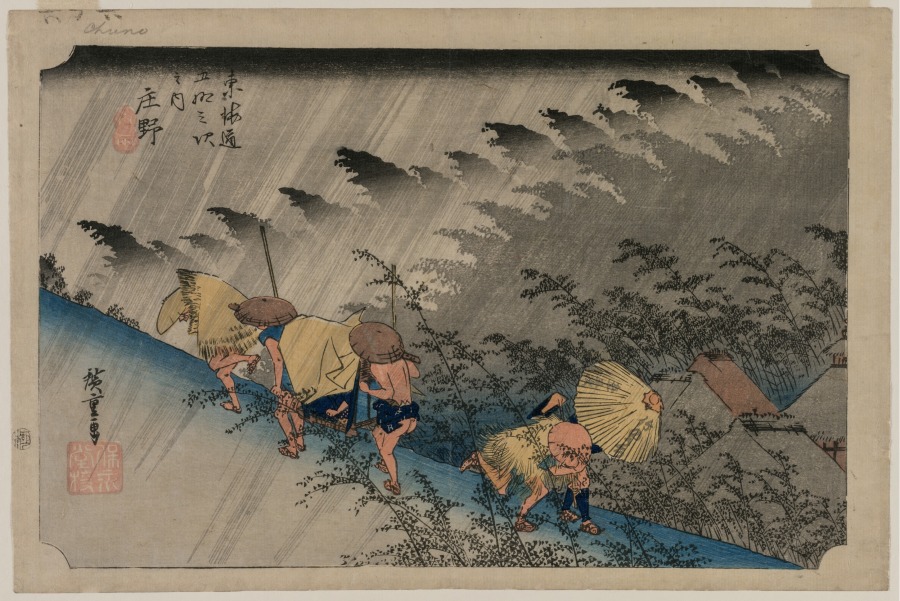 ↗
Utagawa Hiroshige
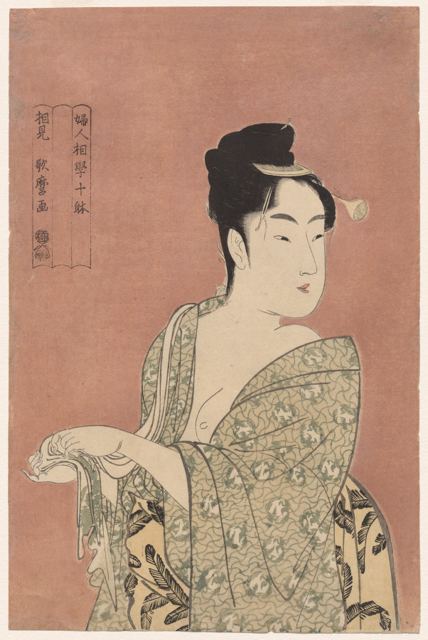 ↗
Kitagawa Utamaro
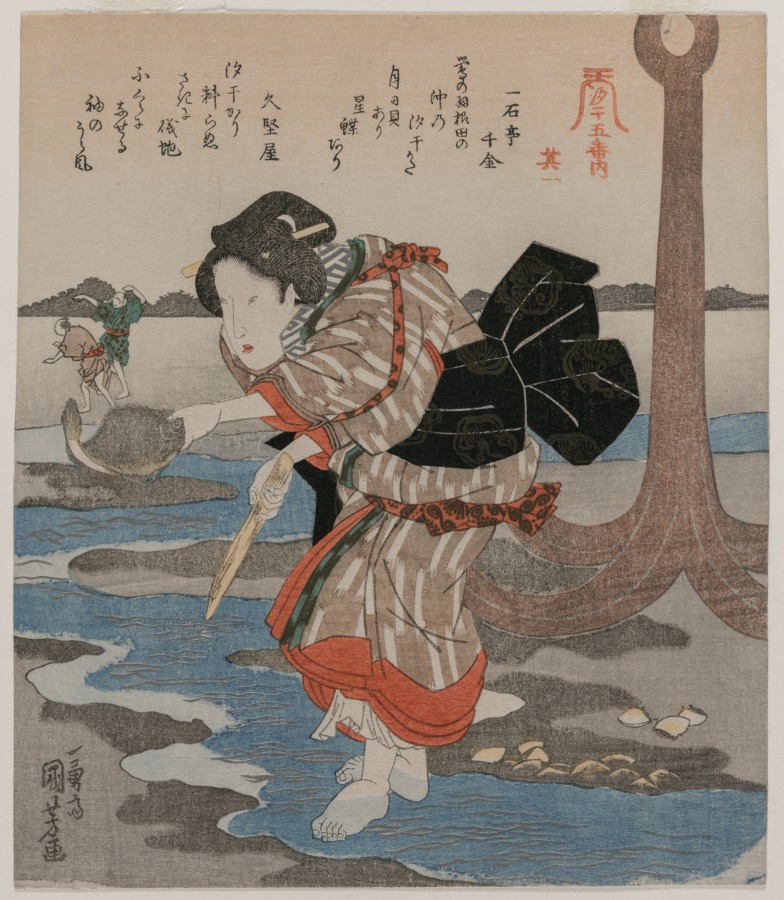 ↗
Utagawa Kuniyoshi