 ↗
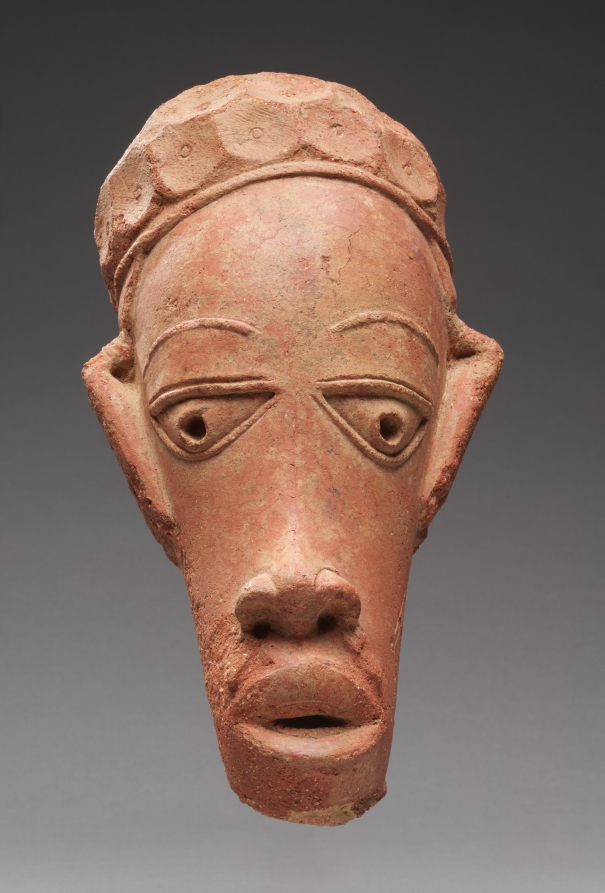
Africa, West Africa, Nigeria, Nok-culture style region, unknown female ceramicist · thermoluminescence date 20–620 CE
Head
Creator not recorded
John L. Severance Fund · The Cleveland Museum of Art
Image licence: CC0 · Image policy · Museum record & image source ↗
Creator not recorded by the museum
A prestige cap changes the outline of the wearer's head. Look at its highest visible point and ask which details an onlooker at eye level would actually see.
Site interpretation and practical exercises. Historical and technical evidence is linked below.
Sources for context The Cleveland Museum of Art ↗
Read alongside
Zimpu (singular: mpu) are intricately knotted caps worn by men in parts of Central Africa. Ringed with leopard claws, this long cap (mpu ngola) once belonged to a high-status man; the fierce feline attachments alluded to his personal qualities, as both were seen as leaders in their domains. Its interlacing motifs appear across artforms made by the Kongo, Vili, and Yombe peoples. When new, caps draped over the head. However, raffia fibers stiffen over time. To support this now-delicate ngola, the CMA’s conservators mounted it upright. Known since at least 1607 in the former Loango Kingdom, as well as the adjacent Kongo Kingdom, such caps were once made by noblemen and worn into at least the 1980s.
Collection text · The Cleveland Museum of Art · CC0↗Creator not recorded
 ↗
Creator not recorded
 ↗
Creator not recorded
 ↗
Creator not recorded