 ↗
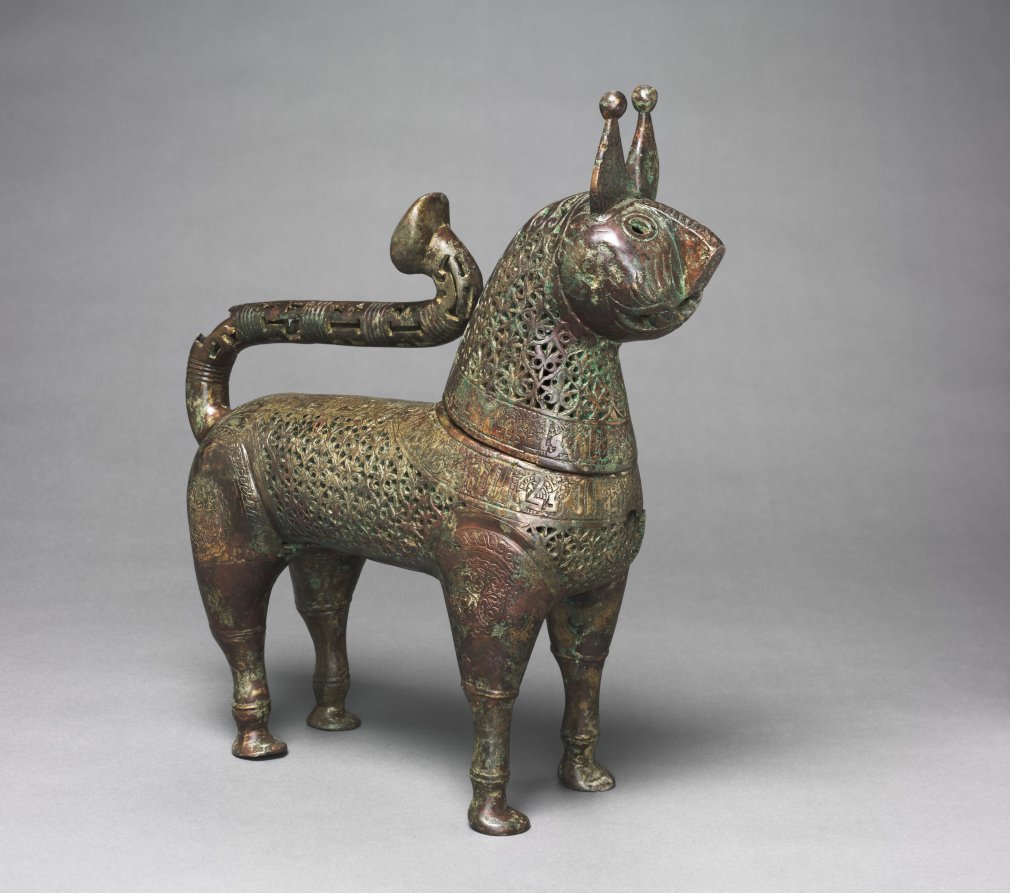
Iran, Seljuq period of Iran (1037–1194) · 1200–1221
The Wade Cup with Animated Script
Creator not recorded
Dudley P. Allen Fund · The Cleveland Museum of Art
Image licence: CC0 · Image policy · Museum record & image source ↗
Creator not recorded by the museum
A new Ọba could commission a brass head for a predecessor's shrine. The layers of coral beads shown here bring royal office and acts of remembrance into the same portrait.
Commemoration involves a relationship across generations. Look at the head as a focus for continuing remembrance before asking whether it resembles an individual in life.
Site interpretation and practical exercises. Historical and technical evidence is linked below.
Sources for context The Cleveland Museum of Art ↗
Read alongside
Brass heads are among many objects a new Ọba commissions when dedicating a shrine to their predecessor. This head of an Ọba wears layered necklaces of royal coral beads. Tubular beads adorn both the netted cap and slender braids alongside his temples. While representing an individual, his facial features and calm expression are idealized. The thickly cast head once supported a tusk. Immune to corrosion, brass symbolizes royal permanence. A personal religious object, this head sat on an ancestral altar in the Ọba’s palace. Like many works taken from Benin altars, this contrasts with its present-day public display in an American museum.
Collection text · The Cleveland Museum of Art · CC0↗Creator not recorded
 ↗
Creator not recorded
 ↗
Creator not recorded
 ↗
Creator not recorded