 ↗
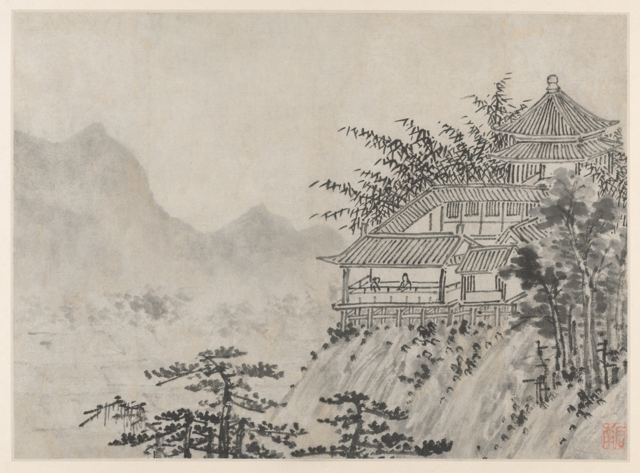
China, Ming dynasty (1368–1644) · after 1490
The Thousand Acres of Clouds, from Twelve Views of Tiger Hill, Suzhou
Shen Zhou
#C0B39A#AB9E86#C8BDA6#948975#B4A78E#C9C4B7Estimated from six colour groups in the museum image, including visible paper or borders. Reproduction and lighting affect the result; these are image-area proportions, not pigment measurements.
Purchase from the J. H. Wade Fund · The Cleveland Museum of Art
Image licence: CC0 · Image policy · Museum record & image source ↗
Attributed to Sahkulu
Follow a foliate curve until it becomes an animal head. The moment your reading changes is the device that holds plant, lion, dragon and phoenix together.
Site interpretation and practical exercises. Historical and technical evidence is linked below.
Sources for context The Cleveland Museum of Art ↗
Read alongside
A dragon lunges toward a pearl in the form of a seal inscribed with a verse from the Koran: “And I commit my case unto God” (40:44). In his front claw, the dragon grasps two flowering branches that magically produce a variety of blooms, including a lion that bites the dragon’s neck and a phoenix, who competes for the pearl. Sahkulu was trained by Persian artists, as were many artists of Mughal India during the 1500s. He joined the Ottoman imperial painting atelier in Istanbul in 1526 and became the head in 1545.
Collection text · The Cleveland Museum of Art · CC0↗Shen Zhou
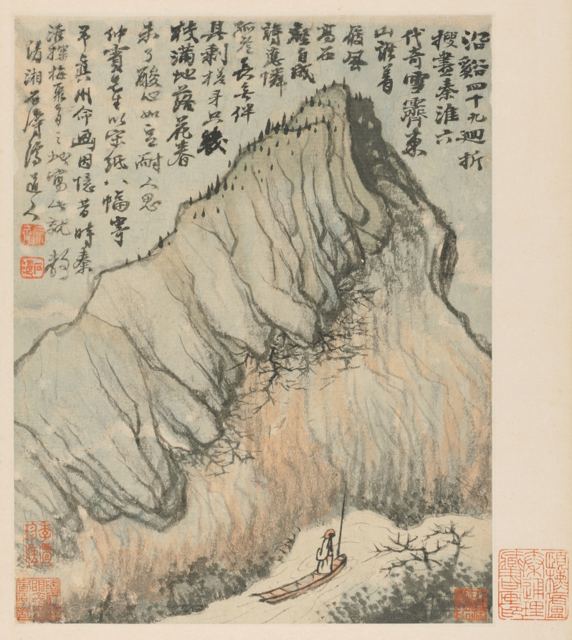 ↗
Shitao
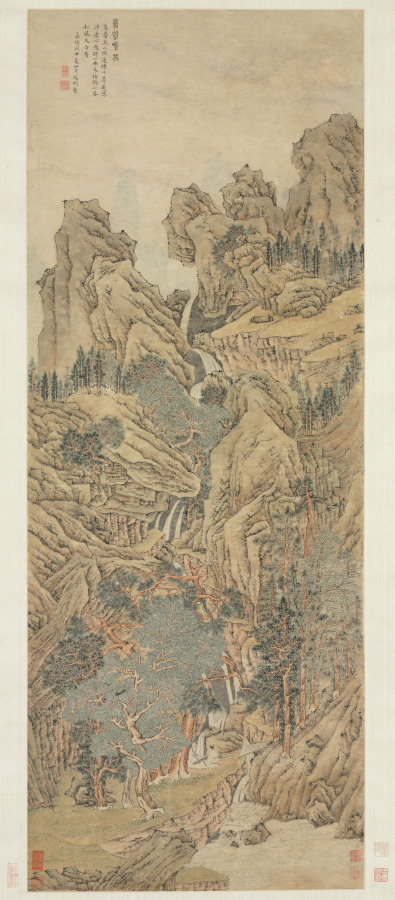 ↗
Wen Zhengming
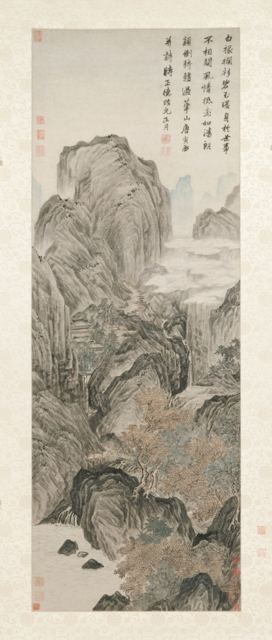 ↗
Tang Yin