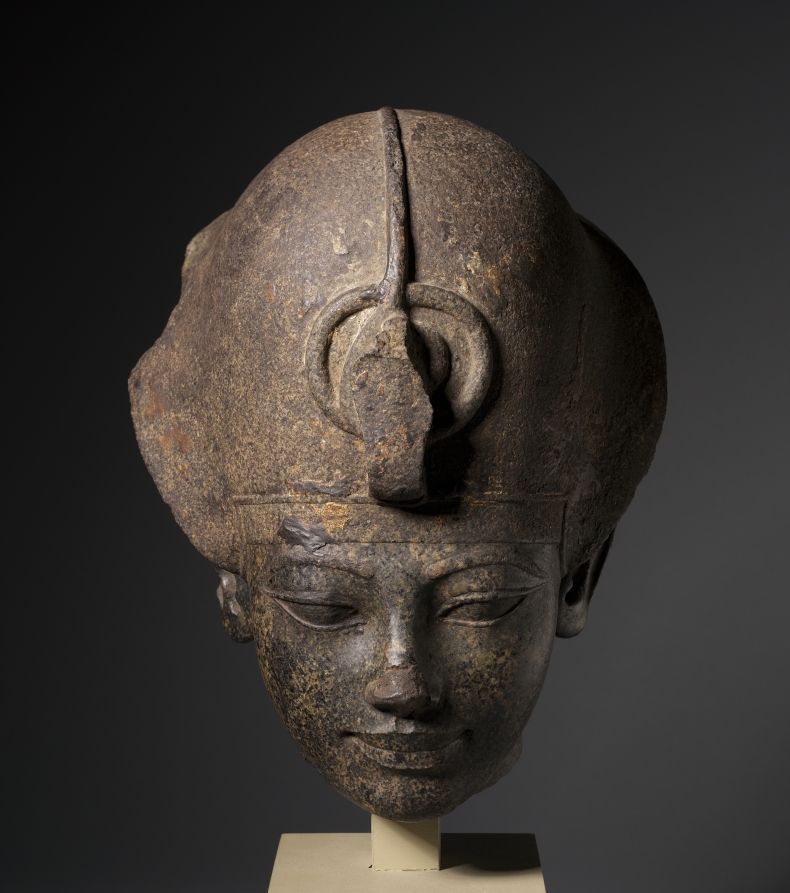
Egypt, New Kingdom (1540–1069 BCE), Dynasty 18, reign of Amenhotep III (1390–1352 BCE) · c. 1391–1353 BCE
A closer look at this work
The bearers personify Egyptian provinces. Food, animals and repetitive processional spacing turn territorial divisions into the image of provisions arriving at a temple.
Offering bearers form a sequence. Mark the repeated carrying gesture and then the differences in what each presents; repetition can organise varied gifts.
Site interpretation and practical exercises. Historical and technical evidence is linked below.
Sources for context The Cleveland Museum of Art ↗
Read alongside
FROM THE MUSEUMThese blocks from a temple wall show four figures identified as nomes, or provinces, of ancient Egypt. Carrying trays heaped with offerings and leading sacrificial animals, they personify the bounty of the land that they bring to the god who stood in the upper register, facing a figure of the king, Amenhotep III. These blocks may be from Amenhotep III's temple, dedicated to the god Horus.
Collection text · The Cleveland Museum of Art · CC0  ↗