 ↗
China, Ming dynasty (1368–1644) · after 1490
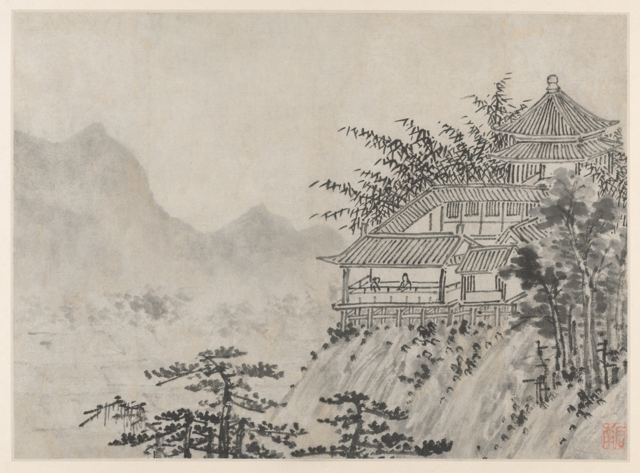
The Thousand Acres of Clouds, from Twelve Views of Tiger Hill, Suzhou
Shen Zhou
#D2BFA6#B9A58C#CBB89F#8D7A6C#C4AD90#DAC5AAEstimated from six colour groups in the museum image, including visible paper or borders. Reproduction and lighting affect the result; these are image-area proportions, not pigment measurements.
Small, vivid details detected in the image. These areas are already included in the dominant groups above; their percentages are not added to the total.
#47598A≈ 0.42%#88453F≈ 0.14%Grace Rainey Rogers Fund · The Cleveland Museum of Art
Image licence: CC0 · Image policy · Museum record & image source ↗
Creator not recorded by the museum
Read this leaf against the other Bahram Gur arrival record. Distinguish the recurring story from the particular object, its face and its museum description.
Site interpretation and practical exercises. Historical and technical evidence is linked below.
Sources for context The Cleveland Museum of Art ↗
Read alongside
In this intense painting, Bahram Gur plunges his sword into the breast of a dragon. A favorite character from Iran's pre-Islamic history, Bahram Gur (reigned 420–38 CE) was a popular ruler of the Sasanian dynasty and a great hunter. He took the name "Gur," meaning onager (a wild ass), because it was his preferred game, although he also excelled at killing dragons. As evidenced by this illustration's rock formations, tree trunk, and dragon, Iranian painting in the Mongol period borrowed numerous stylistic and spatial elements from Chinese models. With the surging landscape and writhing dragon rendered with equal energy, this is a picture of extraordinary unity and concentration.
Collection text · The Cleveland Museum of Art · CC0↗Shen Zhou
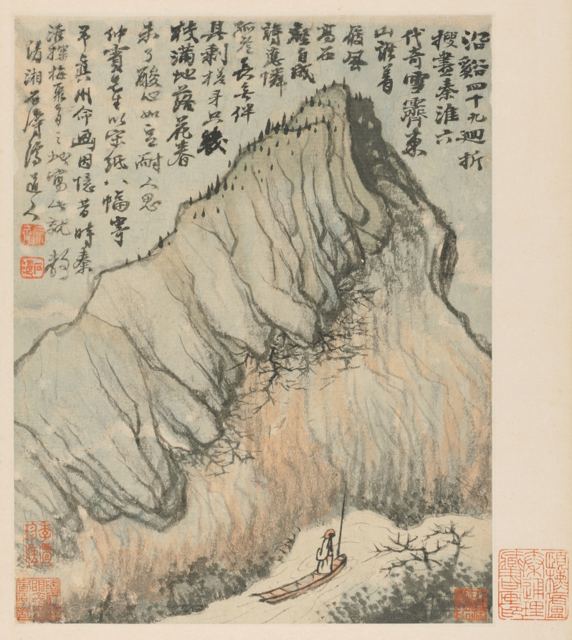 ↗
Shitao
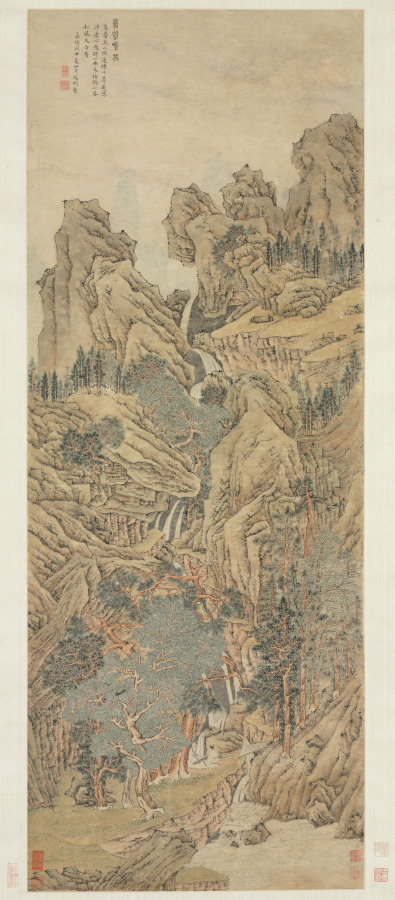 ↗
Wen Zhengming
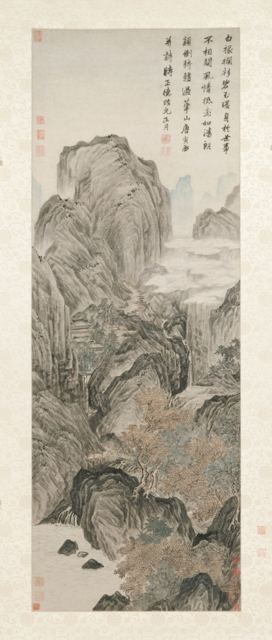 ↗
Tang Yin