 ↗
China, Ming dynasty (1368–1644) · after 1490
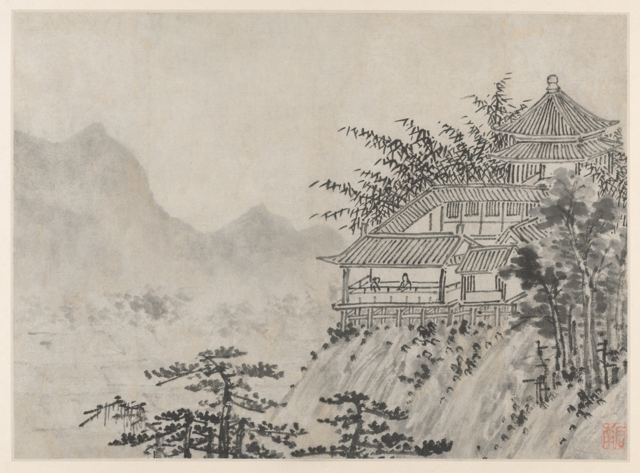
The Thousand Acres of Clouds, from Twelve Views of Tiger Hill, Suzhou
Shen Zhou
#CBBDA4#D2C1A7#BEB09A#A38F7C#C8B699#DAC9ADEstimated from six colour groups in the museum image, including visible paper or borders. Reproduction and lighting affect the result; these are image-area proportions, not pigment measurements.
Small, vivid details detected in the image. These areas are already included in the dominant groups above; their percentages are not added to the total.
#955648≈ 0.56%John L. Severance Fund · The Cleveland Museum of Art
Image licence: CC0 · Image policy · Museum record & image source ↗
Creator not recorded by the museum
A verse page numbers a king's reign in time while arranging words in space. Start with the page's visual divisions before attempting to follow the narrative sequence.
Site interpretation and practical exercises. Historical and technical evidence is linked below.
Sources for context The Cleveland Museum of Art ↗
Read alongside
Mongol interest in the production of illustrated manuscripts eventually focused on Persian epic poetry. The Shahnama, a compilation of the epics and tales of Iran's legendary heroes, was a natural choice; the book included many subjects that suited Mongol taste, such as banquets, battles, hunting, and magical or fantastic events. Seated on the throne in the center of the painting is the Sasanian ruler of Iran, Khusraw I Anushirwan (531–579), descendant of Bahram Gur. Above the king's head an inscription reads, "Picture of Nushirwan the Just." The figure in the elaborate turban to the left of the king is probably the young Minister Buzurgmihr, famous for his wisdom and virtue. To celebrate the explanation of a troublesome dream by Buzurgmihr, Nushirwan held a series of seven banquets. The text around this painting describes the fifth banquet.
Collection text · The Cleveland Museum of Art · CC0↗Shen Zhou
 ↗
Shitao
 ↗
Wen Zhengming
 ↗
Tang Yin