 ↗
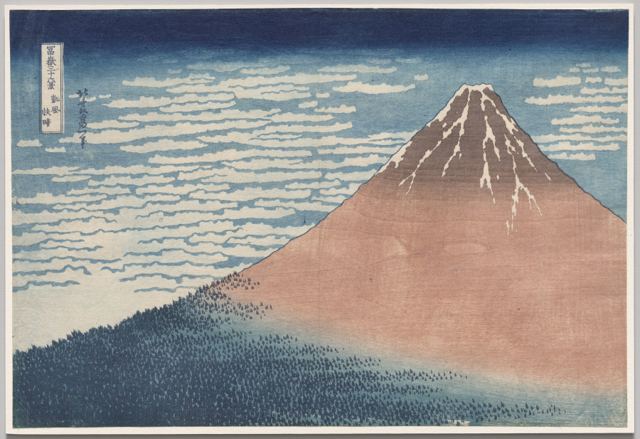
Japan, Edo period (1615–1868) · early 1830s
South Wind, Clear Sky, from Thirty-Six Views of Mount Fuji
Katsushika Hokusai
Purchase from the J. H. Wade Fund · The Cleveland Museum of Art
Image licence: CC0 · Image policy · Museum record & image source ↗
A poem names a speaker; a print must make a scene. Look for the designer's choice of a visible action that extends the poem beyond its written length.
Site interpretation and practical exercises. Historical and technical evidence is linked below.
Sources for context The Cleveland Museum of Art ↗
Read alongside
A bathhouse, its veranda and the sea share this picture. Bands of steam interrupt the building’s diagonal roof, making something that has no fixed outline into a strong part of the design. The poem-series title gives a literary setting, but the image also makes sense through the everyday activity of bathing.
Site study note · based on the linked catalogueExplore the artist’s life and works ↗
This is a colour woodblock print, not a watercolour. Carved outlines and separately printed colour areas work together. The pale steam stands out because of the darker surfaces around it: leaving a light area can be as effective as adding a dark mark. Compare that broken, busy space with the large mountain shape in Red Fuji.
Site study note · catalogue facts and visual interpretation
Check the museum record ↗↗Katsushika Hokusai
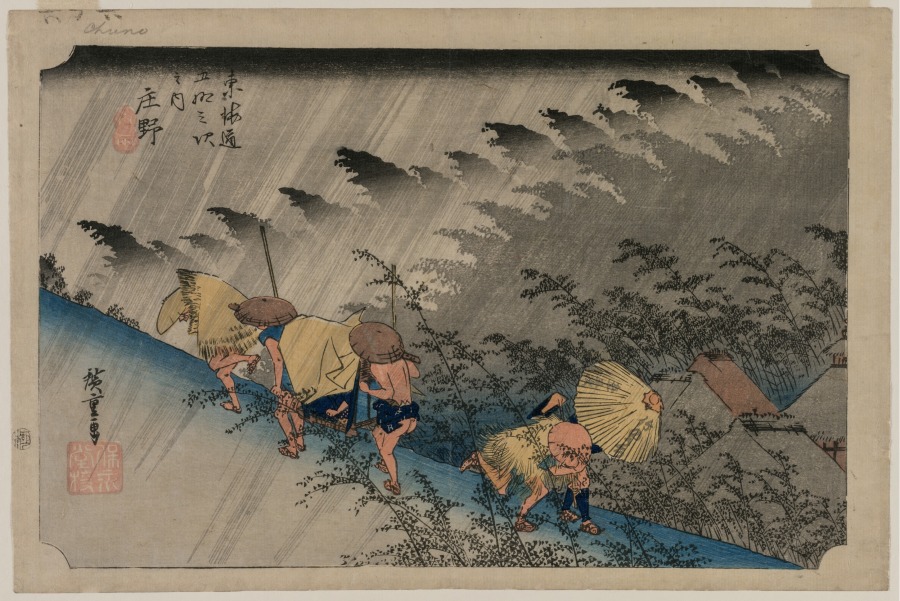 ↗
Utagawa Hiroshige
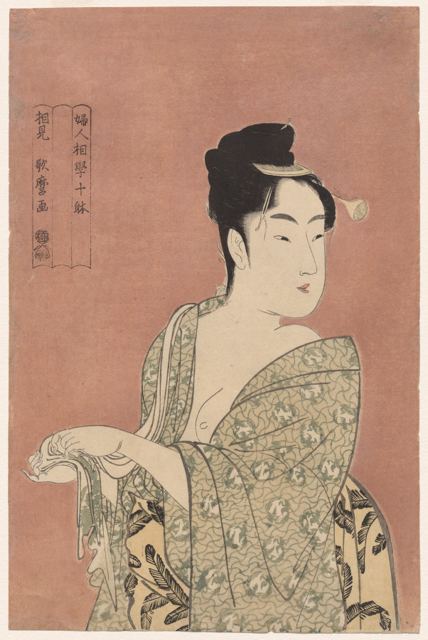 ↗
Kitagawa Utamaro
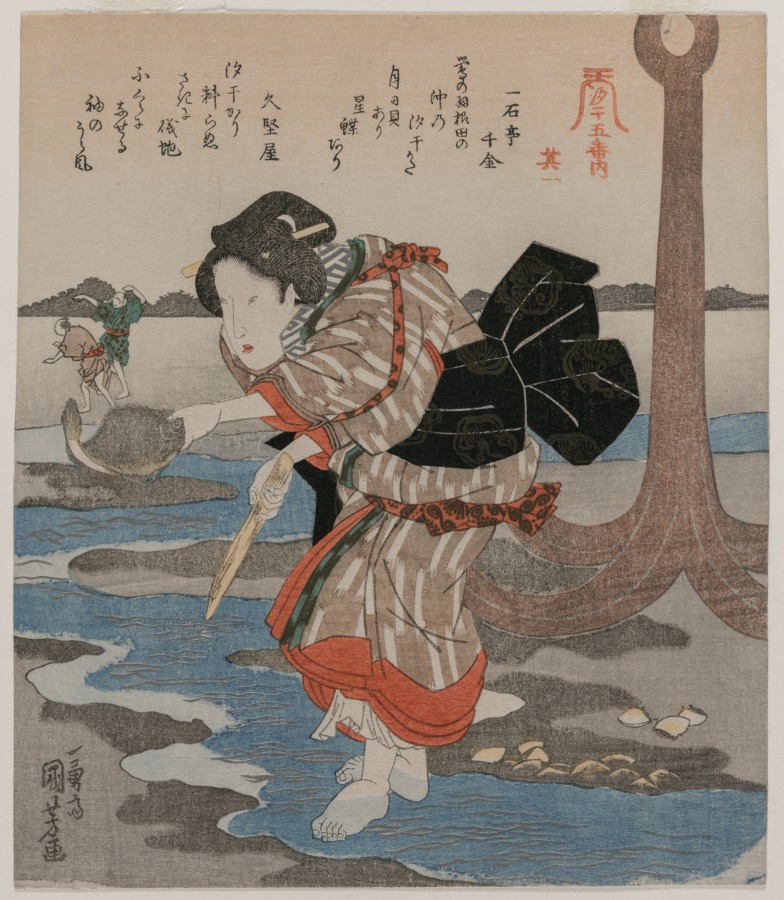 ↗
Utagawa Kuniyoshi