 ↗
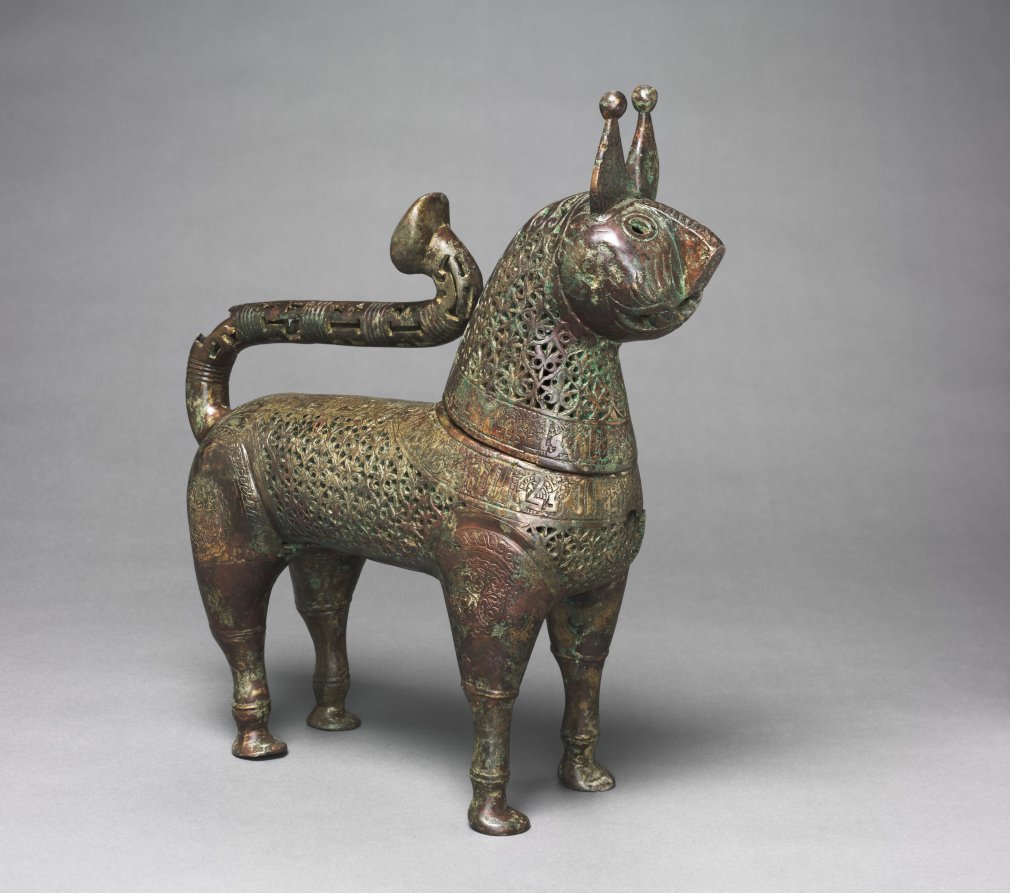
Iran, Seljuq period of Iran (1037–1194) · 1200–1221
The Wade Cup with Animated Script
Creator not recorded
Andrew R. and Martha Holden Jennings Fund · The Cleveland Museum of Art
Image licence: CC0 · Image policy · Museum record & image source ↗
Creator not recorded by the museum
A wooden core and stretched hide give this Cross River region crest two distinct surfaces. What reads as a single head from afar is also a carefully fitted construction.
Place the headdress above an imagined pair of shoulders. A shape easily inspected on a stand becomes a silhouette against the sky when it is worn.
Site interpretation and practical exercises. Historical and technical evidence is linked below.
Sources for context The Cleveland Museum of Art ↗
Read alongside
Headdresses or crest masks made of antelope skin stretched over a carved head are a distinctive art form of the Cross River region in southeastern Nigeria and western Cameroon. Worldwide, this practice is unique. This female evocation of ideal feminine beauty was most probably worn by an Ejagham woman in the context of a female society called Ekpa, which was responsible for girls' education in preparation for marriage. The headdress represents a girl who evokes ideal female beauty and is ready for marriage. The depicted hairstyle was worn during the coming-out ceremony following the girls’ seclusion.
Collection text · The Cleveland Museum of Art · CC0↗Creator not recorded
 ↗
Creator not recorded
 ↗
Creator not recorded
 ↗
Creator not recorded