Hittite, North Syria · c. 1600 BCE
A closer look at this work
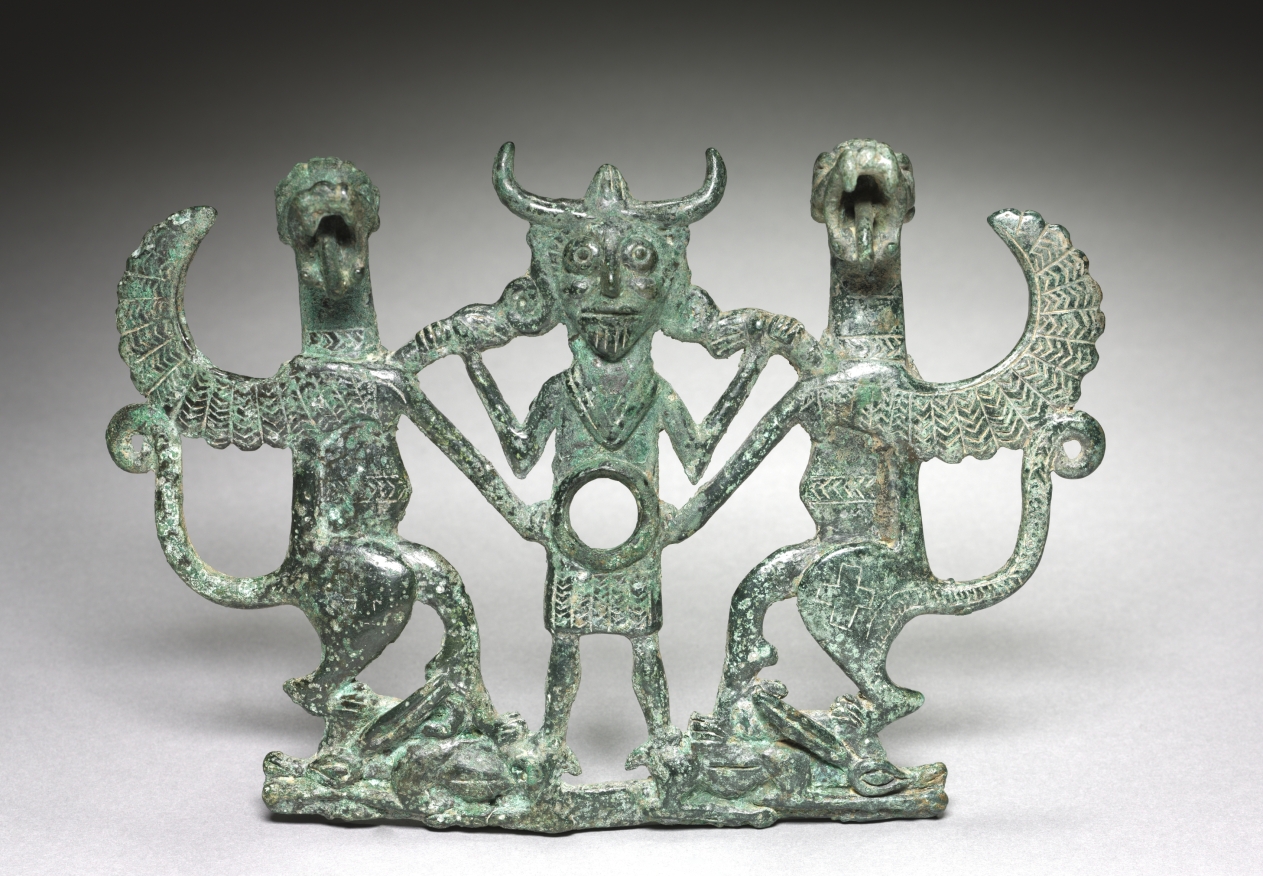
The alternatives priest-king or deity mark a real uncertainty. Make two readings of the same posture and identify which observed details both readings must explain.
Site interpretation and practical exercises. Historical and technical evidence is linked below.
Sources for context The Cleveland Museum of Art ↗
Read alongside
FROM THE MUSEUMThe Hittites migrated into Anatolia in the 3rd millennium BCE and spoke an Indo-European language, a group that includes Greek, Latin, Persian, Sanskrit, English, and most modern European languages. They were the first ancient people to use iron for weapons. From about 1600–1200 BCE their empire was at its peak, extending from central Anatolia to Syria, and south along the eastern Mediterranean. Their vast empire and interest in commerce enabled the Hittites to spread Mesopotamian ideas and culture throughout the ancient Mediterranean world. This large basalt sculpture is exceptionally rare in depicting a Hittite god or priest-king wearing a horned conical crown, false beard, and long robe. He holds a bowl in his right hand and once held something in his left, perhaps a staff or sword.
Collection text · The Cleveland Museum of Art · CC0  ↗