 ↗
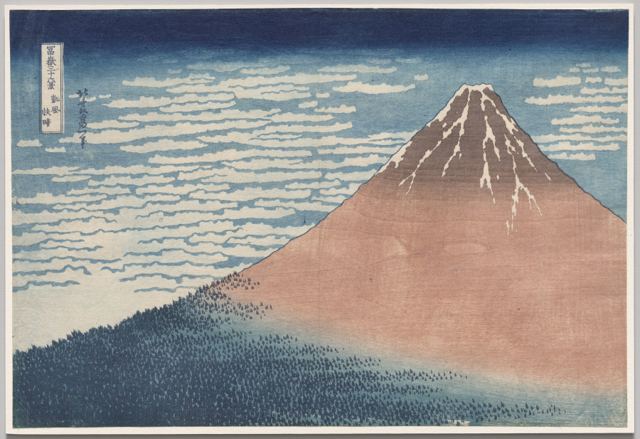
Japan, Edo period (1615–1868) · early 1830s
South Wind, Clear Sky, from Thirty-Six Views of Mount Fuji
Katsushika Hokusai
The Kelvin Smith Collection, given by Mrs. Kelvin Smith · The Cleveland Museum of Art
Image licence: CC0 · Image policy · Museum record & image source ↗
Pines can act as a screen in front of a distant Fuji. Compare looking through gaps in the trees with looking directly at the mountain in Red Fuji.
Site interpretation and practical exercises. Historical and technical evidence is linked below.
Sources for context The Cleveland Museum of Art ↗
Read alongside
Mount Fuji rises beyond a bay, wooded shore and small boats. Unlike a view built around one close landmark, this vertical design stacks several distances within a narrow sheet. The pine groves help connect the nearby shore to the far mountain rather than acting as an isolated border.
Site study note · based on the linked catalogueExplore the artist’s life and works ↗
This 1858 woodblock uses ink and colour on paper. Clear contours keep the different distances readable even where colours are relatively flat. Place it beside Hokusai’s Red Fuji: both feature the same mountain, but foreground activity and the balance between mountain and surrounding space produce different viewing experiences.
Site study note · catalogue facts and visual interpretation
Check the museum record ↗↗Katsushika Hokusai
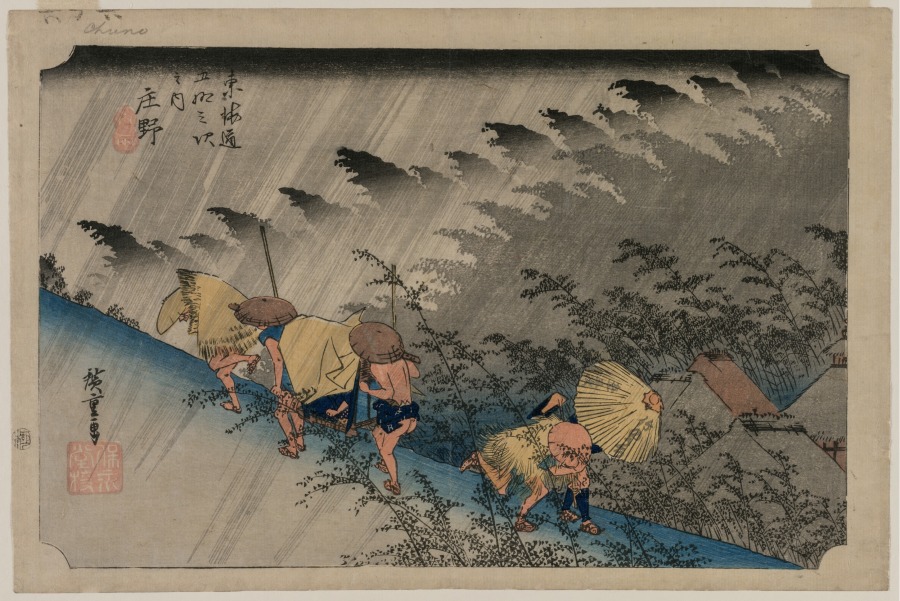 ↗
Utagawa Hiroshige
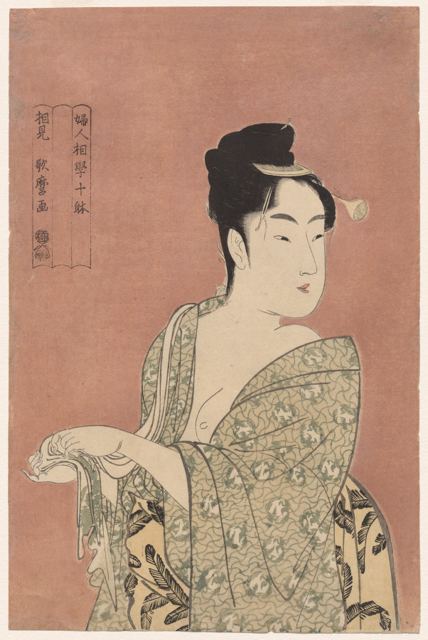 ↗
Kitagawa Utamaro
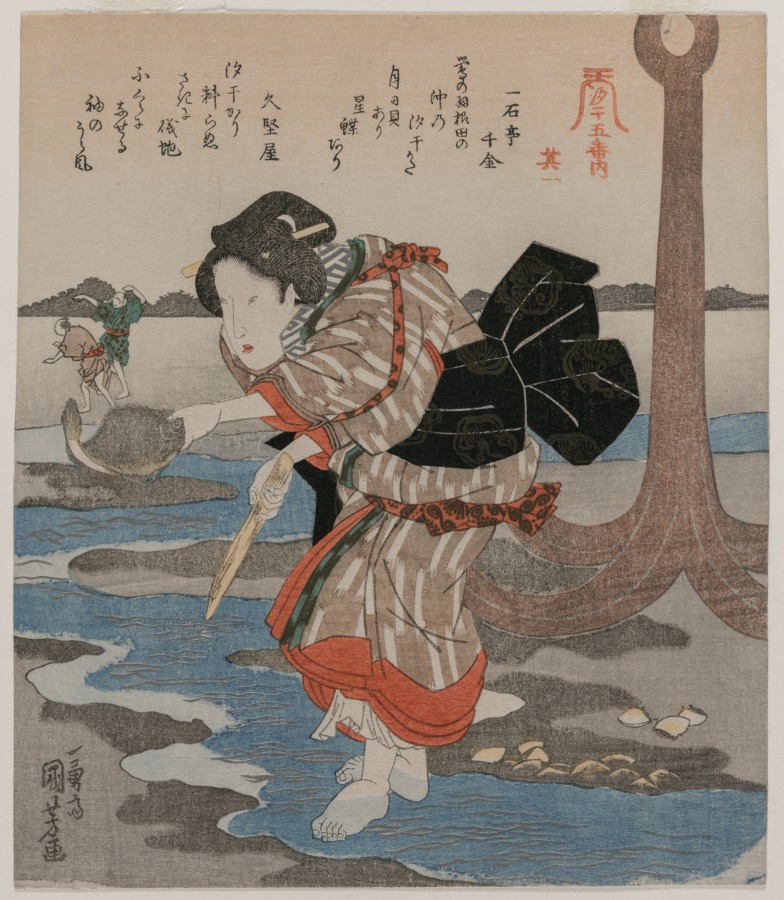 ↗
Utagawa Kuniyoshi