 ↗
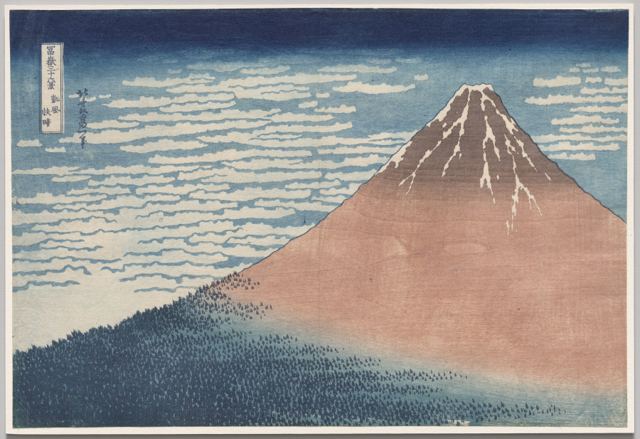
Japan, Edo period (1615–1868) · early 1830s
South Wind, Clear Sky, from Thirty-Six Views of Mount Fuji
Katsushika Hokusai
The Kelvin Smith Collection, given by Mrs. Kelvin Smith · The Cleveland Museum of Art
Image licence: CC0 · Image policy · Museum record & image source ↗
Ōmori appears within a series of famous places. Ask what visual clue a buyer could remember from this sheet and use to recognise the named place later.
Site interpretation and practical exercises. Historical and technical evidence is linked below.
Sources for context The Cleveland Museum of Art ↗
Read alongside
Sites around Edo (present-day Tokyo) were popular subjects of ukiyo-e (pictures of the floating world) prints in the early 1800s. The calligraphy in the red circle on the upper right is the title of the series, The Famous Places in the Eastern Capital. The Ōmori district, on Edo Bay a few miles south of Edo, was known for its cultivation of nori, the crackly sheets of seaweed commonly wrapped around rice balls or sushi rolls. Utagawa Kuniyoshi depicted two women gathering seaweed from cultivation beds. One uses chopsticks, while the other gently rakes the seaweed into the baskets in their boat. The tip of another skiff behind the stand of plants on the right and the cultivation beds in the distance suggest the scale and importance of this industry.
Collection text · The Cleveland Museum of Art · CC0↗Katsushika Hokusai
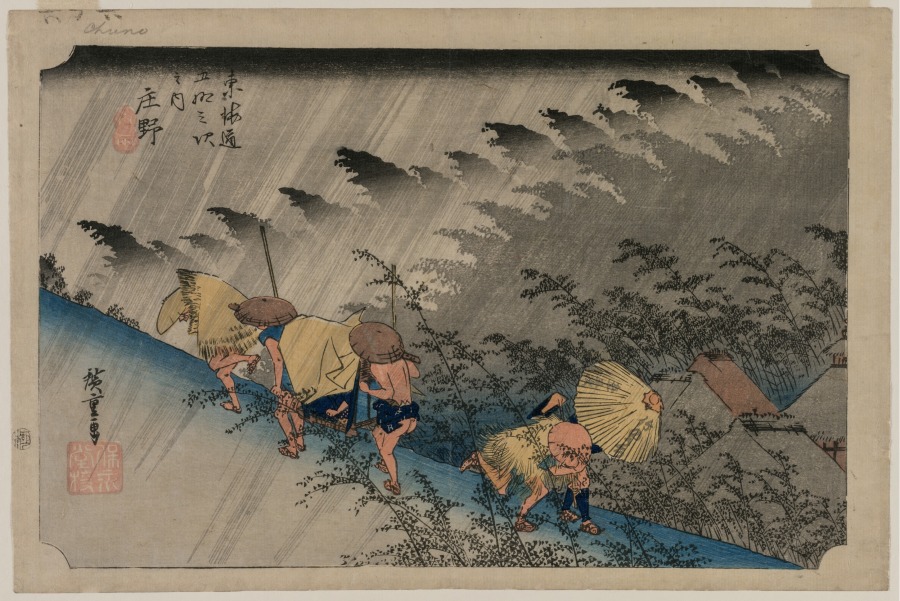 ↗
Utagawa Hiroshige
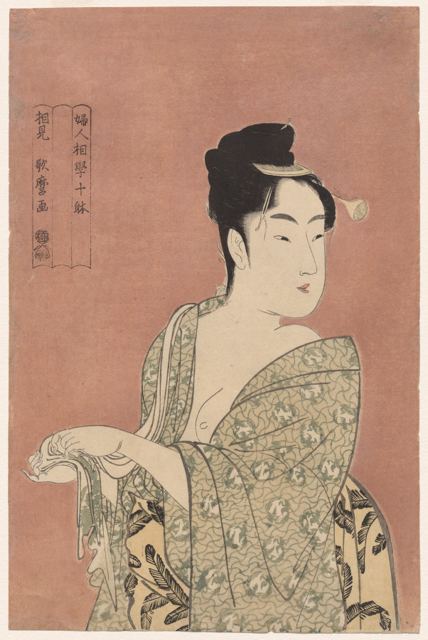 ↗
Kitagawa Utamaro
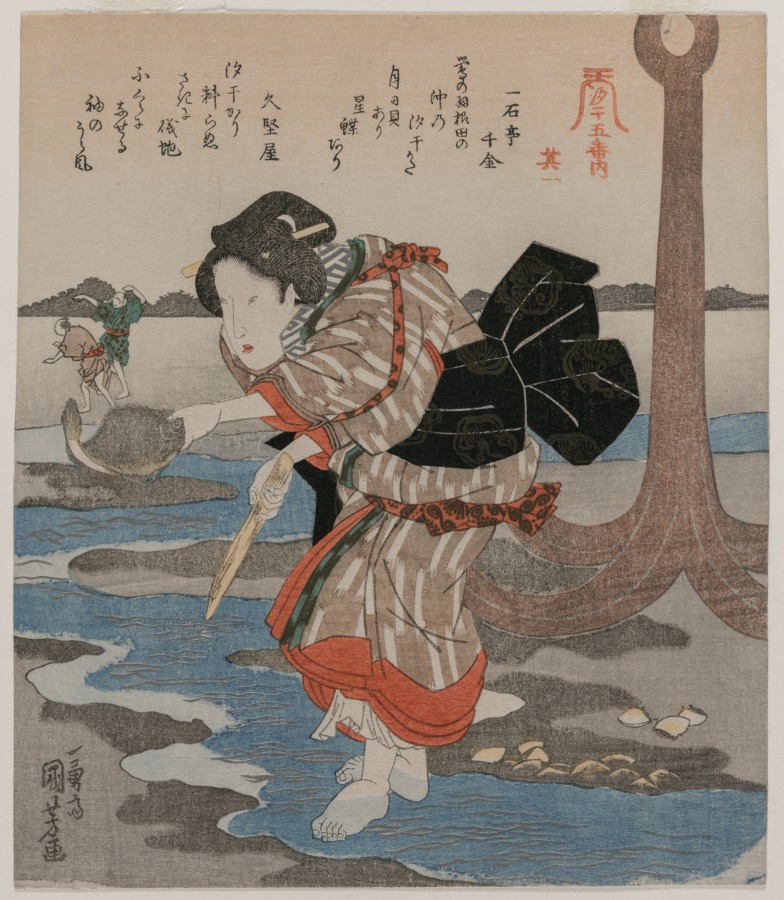 ↗
Utagawa Kuniyoshi