 ↗
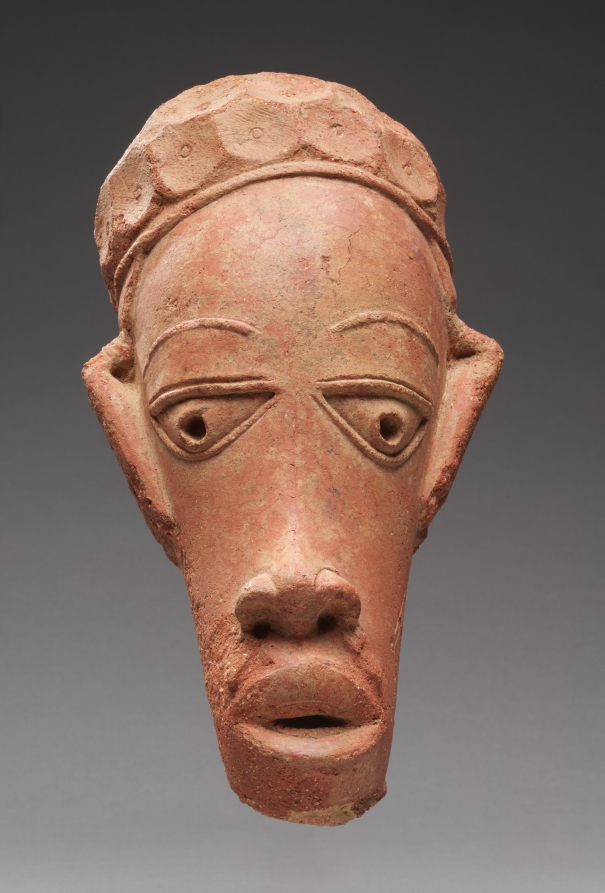
Africa, West Africa, Nigeria, Nok-culture style region, unknown female ceramicist · thermoluminescence date 20–620 CE
Head
Creator not recorded
Gift in memory of Mr. and Mrs. Ralph M. Coe from various donors · The Cleveland Museum of Art
Image licence: CC0 · Image policy · Museum record & image source ↗
Creator not recorded by the museum
The name baàthíl locates this object in a particular tradition. Describe stance and placement before using the broad category figure to compare it with a portrait.
Site interpretation and practical exercises. Historical and technical evidence is linked below.
Sources for context The Cleveland Museum of Art ↗
Read alongside
This headpost (baàthíl) was likely a temporary sanctuary for khélé, a harmful spirit released after killing a person or dangerous animal. Around 1900, members of the Milkuùr religious association used baàthíla to counteract khélé. While the head resembles that of a teenage girl with pierced upper lip and earlobes, the roughly hewn, pole-like bottom suggests otherwise. Buried in an altar, devotees ritually applied materials that darkened the exposed head. When the owner died, the khélé left the sculpture; no longer sacred, it was buried. Milkuùr’s strict rules ensure these objects are made from the appropriate wood and that artists’ names remain secret.
Collection text · The Cleveland Museum of Art · CC0↗Creator not recorded
 ↗
Creator not recorded
 ↗
Creator not recorded
 ↗
Creator not recorded